

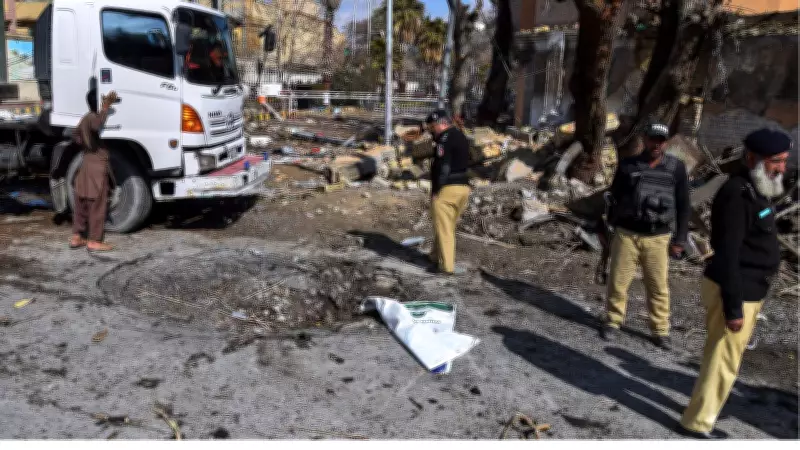
India has issued a strong and unequivocal rejection of allegations made by Pakistan, which sought to link New Delhi to a series of recent deadly attacks in the restive Balochistan province. The Indian government has categorically dismissed these claims as "baseless" and without any factual foundation, asserting that such accusations are a deliberate attempt by Islamabad to divert attention from its own internal security challenges and governance failures.
Firm Rebuttal from New Delhi
In a formal statement, the Ministry of External Affairs of India responded to Pakistan's assertions, which emerged following violent incidents in Balochistan that resulted in significant casualties. Indian officials emphasized that the country has a longstanding and consistent policy of non-interference in the internal affairs of other nations, and it strictly adheres to international norms and laws concerning sovereignty and territorial integrity.
Context of the Allegations
The allegations from Pakistan surfaced in the wake of attacks in Balochistan, a region that has been plagued by insurgency and separatist movements for decades. These incidents have led to loss of life and heightened tensions in the area. Pakistan's authorities pointed fingers at external actors, specifically naming India, in what appears to be a recurring pattern of blame-shifting amidst ongoing domestic unrest.

India's response highlighted that such unsubstantiated claims are not only irresponsible but also counterproductive to regional peace and stability. The statement underscored that India remains committed to combating terrorism in all its forms and manifestations, and it expects other countries to do the same without resorting to baseless accusations.
Regional Implications and Diplomatic Standoff
This latest exchange adds another layer to the already strained diplomatic relations between India and Pakistan, two nuclear-armed neighbors with a history of conflicts and disputes. The rejection by India is seen as part of a broader strategy to maintain a firm stance against what it perceives as Pakistan's propaganda efforts aimed at tarnishing India's image on the global stage.
Experts suggest that such allegations often arise from Pakistan's internal political dynamics, where externalizing blame can serve as a tool to consolidate domestic support or deflect criticism over security lapses. India, on its part, has consistently advocated for bilateral issues to be addressed through dialogue and peaceful means, rather than through inflammatory rhetoric.
Looking Ahead
As the situation unfolds, the international community is closely monitoring the developments in South Asia, given the potential for escalation. India's clear dismissal of the allegations is expected to reinforce its position as a responsible global actor, while calling on Pakistan to focus on addressing its own internal challenges constructively.
In conclusion, India's rejection of Pakistan's claims over the Balochistan attacks underscores a commitment to truth and diplomacy, amid ongoing regional tensions. The episode serves as a reminder of the complex geopolitical landscape in the area, where accusations and counter-accusations can quickly overshadow efforts towards peace and cooperation.






