

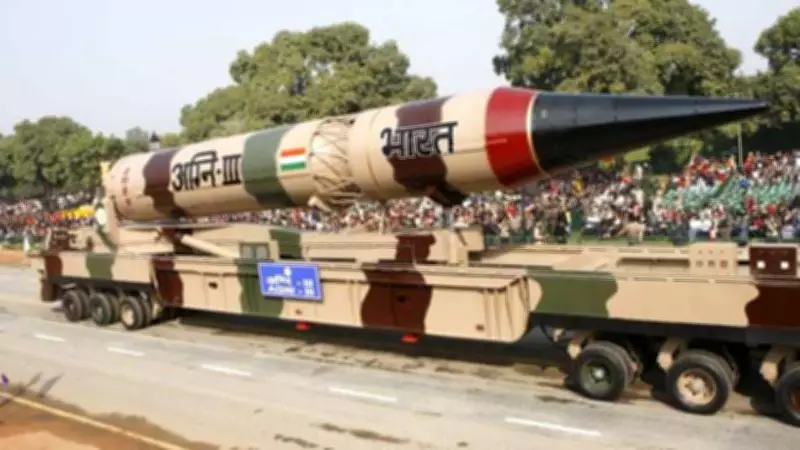
India Successfully Conducts Agni-3 Intermediate-Range Ballistic Missile Test
India achieved a significant milestone in its defense capabilities on Friday with the successful test-firing of the Agni-3 intermediate-range ballistic missile. The launch was conducted from the Integrated Test Range located in Chandipur, Odisha, marking another crucial validation of the country's strategic weapons systems.
Strategic Forces Command Executes Flawless Launch
The test was carried out by India's elite Strategic Forces Command (SFC), which is responsible for the management and deployment of the nation's nuclear arsenal. According to official reports, the launch successfully validated all operational and technical parameters of the missile system, demonstrating its readiness and reliability for strategic deterrence purposes.
Agni-3: A Cornerstone of India's Nuclear Deterrence
The Agni-III represents a critical component of India's nuclear triad, having been in active service with the Strategic Forces Command since 2011. This indigenously developed missile system serves as a powerful deterrent with its impressive operational capabilities.

Key Specifications and Capabilities:
- Range: 3,000 to 3,500 kilometers, classifying it as an intermediate-range ballistic missile (IRBM)
- Payload Capacity: Capable of carrying a substantial 1,500 kilogram payload
- Warhead Capability: Designed primarily as a nuclear delivery system with an estimated warhead yield of 200 to 300 kilotons
- Physical Dimensions: Measures 16.7 meters in length with a 2-meter diameter and a launch weight of 48,300 kilograms
Advanced Technological Features
The Agni-3 incorporates sophisticated technology that ensures its precision and reliability. The missile utilizes a two-stage, solid-fuel propulsion system that provides enhanced responsiveness and operational flexibility. Its guidance system combines a strapdown inertial navigation system (INS) with GPS support, resulting in exceptional accuracy with a circular error probable (CEP) of approximately 40 meters.
Structural Innovation: The missile's first stage employs a maraging steel motor case, while the second stage features a lightweight carbon-fiber motor case. Both stages incorporate advanced thrust vector control systems that significantly improve flight stability and targeting accuracy.
Proven Track Record Through Multiple Tests
This latest test represents one of several successful validations conducted by the Strategic Forces Command over the years. Each test has contributed to refining the missile's performance and confirming its operational readiness. The consistent success of these tests underscores India's growing technological prowess in developing sophisticated defense systems.
The successful Agni-3 test reinforces India's commitment to maintaining a credible minimum deterrent as part of its nuclear doctrine. This indigenous missile system stands as a testament to the country's advancing defense research and development capabilities, providing strategic autonomy in national security matters.






