India's Strategic Dilemma: To Join or Not Join Trump's Board of Peace Initiative
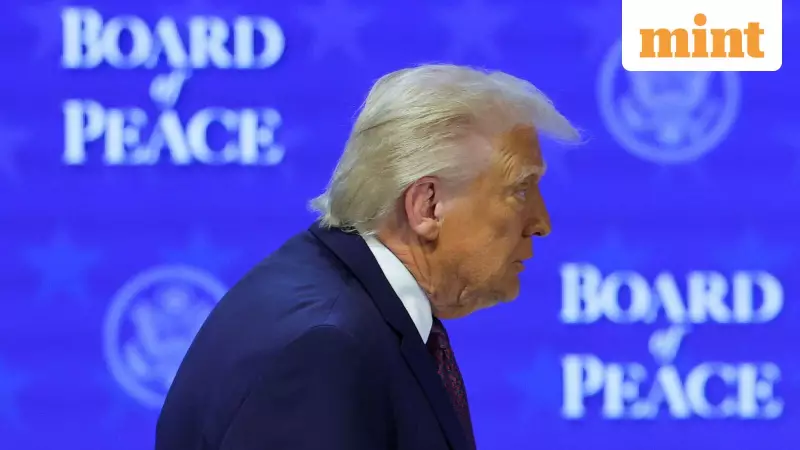
In a significant diplomatic development, the United States under President Donald Trump has launched the Board of Peace (BoP), an international body initially conceived for overseeing interim governance and reconstruction in post-war Gaza. While European powers like the United Kingdom and France have declined participation, India finds itself at a critical juncture, having received an invitation but opting for careful examination before committing.
The Evolving Nature of Trump's Peace Board
The Board of Peace emerged from President Trump's Middle East peace vision, first outlined in September 2025 as a "new international transitional body" specifically for Gaza. By November 2025, it gained formal backing from the UN Security Council, securing international legitimacy through 2027. However, recent revelations indicate a broader, more ambitious scope than originally anticipated.
According to the BoP charter, the board aims to secure "enduring peace in areas affected or threatened by conflict" without any specific mention of Gaza. This expansion of mandate, coupled with language describing the need for "a more nimble and effective international peace-building body," is widely interpreted as a direct challenge to the United Nations' traditional peacekeeping role.

Controversial Provisions and Global Skepticism
The BoP framework has raised eyebrows internationally due to several contentious elements:
- Concentration of Power: The charter grants extraordinary authority to the board chairman (President Trump), including powers to nominate or remove members, veto member decisions, name his successor, and enact resolutions to advance the board's mission.
- Financial Hierarchy: A "pay-to-play" system allows countries contributing $1 billion to secure permanent membership, while others serve limited three-year terms. Former Indian diplomat Ausaf Sayeed criticized this as creating "a graded system of privilege" that transforms sovereignty from an equal right to a weighted hierarchy.
- UN Supersession Concerns: Many analysts worry the BoP could effectively supplant United Nations mechanisms, particularly given its broader conflict resolution mandate.
Current Membership Landscape and Notable Absences
The founding ceremony in Davos, Switzerland on January 22 saw twenty nations join, including:
- United States (host)
- Argentina, Turkey, Hungary, Indonesia
- Bulgaria, Bahrain, Kazakhstan, Kosovo
- Qatar, United Arab Emirates, Armenia, Azerbaijan
- Morocco, Paraguay, Pakistan
Israel had previously indicated its intention to join. However, several traditional US allies—including France, Britain, Norway, and Sweden—have explicitly declined participation at this time, reflecting broader international reservations about the initiative's structure and implications.
India's Calculated Reservations and Strategic Considerations
While India hasn't publicly articulated specific objections, several factors contribute to its cautious approach:
- Kashmir Concerns: Pakistan's membership creates apprehension that Islamabad might leverage the BoP platform to internationalize the Kashmir issue, a scenario India has consistently resisted.
- Historical Precedent: India declined Trump's mediation offers during his first term and rejected claims about his role in India-Pakistan de-escalation during Operation Sindoor, establishing a pattern of sovereignty protection.
- Strategic Positioning: Some analysts argue that participation might offer better opportunities to counter Pakistani narratives "from inside the room" rather than externally.
Broader Implications for India-US Relations
India's decision carries significant bilateral implications. Given President Trump's noted temperament, a rejection could be perceived negatively. This comes at a delicate time when:

- The India-US trade deal remains under negotiation
- Tariff issues persist, with some Indian tariffs reaching 50%
- Technology and investment partnerships continue to be crucial
- India seeks participation in initiatives like Pax Silica to enhance technological capabilities against Chinese competition
Despite these considerations, India has maintained a pragmatic approach to managing US relations across various policy differences.
Potential Advantages and Negotiation Opportunities
Former diplomat Ajay Bisaria suggests India could potentially leverage BoP participation for strategic gains:
- Conditional Support: India could express support specifically for Gaza-related BoP activities while clarifying its position on broader conflict resolution.
- Transactional Benefits: In today's transactional global environment, India could negotiate advantages such as accelerated conclusion of the India-US trade deal.
- Architectural Influence: If the BoP evolves into a new global governance framework, India could position itself for greater influence in what might represent the most significant international restructuring since 1945.
India maintains its own critiques of the UN system, particularly regarding Security Council representation. However, New Delhi remains committed to multilateral principles. The BoP decision thus represents not just a choice about a specific initiative, but a strategic calculation about India's role in potential global realignments.