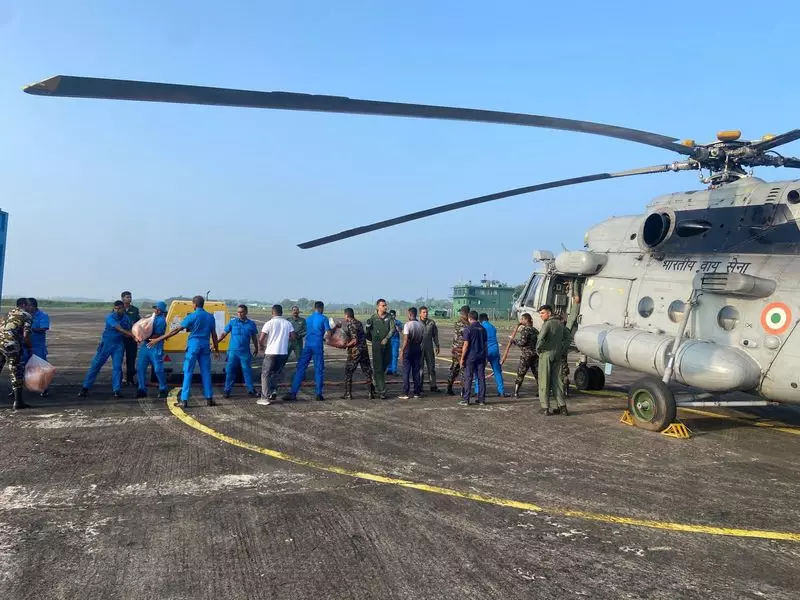
In a powerful demonstration of maritime neighborly assistance, the Indian Navy's proactive 'Sagar Bandhu' initiative has successfully concluded critical rescue and medical operations in Sri Lanka. The mission, which unfolded over recent days, directly saved nine lives and provided essential medical care to hundreds more, reinforcing India's role as a first responder in the Indian Ocean Region.
A Swift Response to Distress
The operations were activated following urgent requests from the Sri Lankan health authorities and the Indian High Commission in Colombo. The primary focus was on facilitating the transfer of critically ill patients from remote islands to major hospitals on the Sri Lankan mainland for emergency treatment.
Central to this effort was the Indian Naval Ship Kumbhir, which was swiftly deployed. The vessel undertook multiple medical evacuations, braving challenging sea conditions. In one notable operation, the ship successfully retrieved a patient suffering from a heart attack from the isolated Delft Island, ensuring they received timely, life-saving care.

Medical Camps and Widespread Aid
Beyond emergency evacuations, the Sagar Bandhu mission included a significant humanitarian component. Indian naval medical teams, in close coordination with Sri Lankan health officials, organized special medical camps. These camps were set up in the Northern and Eastern Provinces of Sri Lanka, areas often with limited access to advanced healthcare facilities.
The outreach had a substantial impact. According to official reports, the medical teams provided consultation, treatment, and essential medicines to over 300 local residents. This direct aid addressed a range of health issues, bringing relief to communities and alleviating pressure on local medical infrastructure.
Strengthening Bonds Through Action
The success of the Sagar Bandhu initiative underscores the deep-rooted people-centric partnership between India and Sri Lanka. It translates the policy of 'Neighbourhood First' into tangible, life-saving action. The seamless coordination between the Indian Navy, the Indian High Commission, and Sri Lankan authorities was pivotal to the mission's efficiency.
This operation is not an isolated event but part of a consistent pattern of assistance. India has repeatedly acted as a primary responder during crises in Sri Lanka, whether during natural disasters, economic difficulties, or medical emergencies like the COVID-19 pandemic. The latest mission reinforces the Indian Navy's commitment to ensuring safety and security for all in the region's shared maritime domain.
The positive outcomes—nine lives saved and over 300 individuals treated—stand as a testament to the initiative's effectiveness. They highlight how strategic humanitarian assistance builds trust, goodwill, and stronger bilateral ties, proving that compassion and cooperation are cornerstones of regional stability.