Indian LPG Tanker Faces Three-Week Strait of Hormuz Standoff Amid Regional Tensions
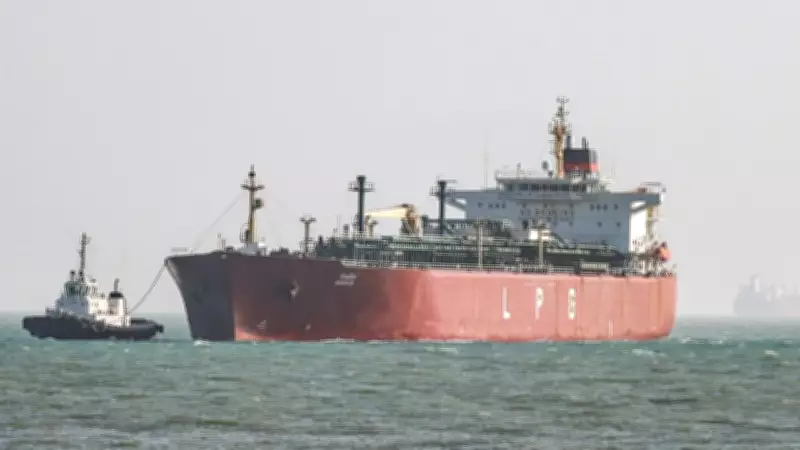
The Indian-flagged liquefied petroleum gas tanker Pine Gas experienced a harrowing delay of nearly three weeks in the strategically vital Strait of Hormuz, as Iran implemented selective passage protocols following military escalations in the region. This incident highlights the growing maritime challenges in one of the world's most critical shipping corridors.
Perilous Wait Under a Sky of Conflict
The vessel had completed loading its cargo at the United Arab Emirates' Ruwais port on February 28, just one day before coordinated attacks targeted Iran by Israel and the United States. What should have been a routine week-long journey to India transformed into an extended period of uncertainty and danger.
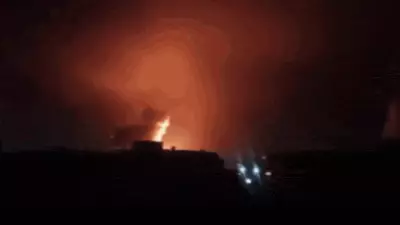
Chief Officer Sohan Lal provided a chilling account of the experience, revealing that the ship's 27 Indian crew members observed missiles and drones flying overhead daily during their prolonged wait. In verified video footage, at least five projectiles could be seen streaking across the night sky directly above the stationary vessel, creating an atmosphere of constant apprehension.

Navigating Through Uncharted and Dangerous Waters
Indian authorities had initially instructed the crew to prepare for departure around March 11, but escalating regional conflicts forced further delays. The Pine Gas finally received clearance to move on March 23, but not through the conventional Hormuz shipping lanes that facilitate global energy transport.
Instead, Iran's Islamic Revolutionary Guard Corps directed the tanker to navigate a narrow, unconventional channel north of Larak Island along Iran's coastline. "They needed a yes or a no from all crew," Lal explained. "Everyone onboard agreed to proceed with the alternative route." The IRGC recommended this passage because the regular Strait of Hormuz lanes were reportedly mined, presenting unacceptable risks to commercial shipping.
Indian Navy's Protective Escort Through Dangerous Waters
During this precarious transit, the Indian Navy provided crucial guidance to the Pine Gas. Following the strait crossing, four Indian warships escorted the tanker for approximately 20 hours from the Gulf of Oman to the relative safety of the Arabian Sea. Notably, the vessel did not pay any passage fees, and the IRGC did not board the ship at any point during the operation.
The Indian Navy has officially confirmed its ongoing escort operations for Indian-flagged vessels after they navigate the Strait of Hormuz. Meanwhile, India's Ministry of External Affairs emphasized this month that the Indian Navy maintains a consistent presence in the Gulf of Oman and Arabian Sea to secure sea lanes for both Indian and international shipping interests.
Strategic Importance and Broader Implications
This incident carries significant implications for India's energy security, as the nation depends heavily on seaborne imports of liquefied petroleum gas. Hundreds of millions of Indian households rely on LPG for daily cooking needs, making secure maritime transport absolutely essential.
The Pine Gas was transporting 45,000 metric tons of LPG originally destined for Mangalore on India's west coast. However, Indian authorities redirected the vessel to discharge equal volumes at the eastern ports of Visakhapatnam and Haldia, demonstrating adaptive logistics management amid the crisis.
Iran has stated that it permits passage through the Strait of Hormuz to "friendly nations" including China, Russia, India, Iraq, and Pakistan. While six Indian-flagged ships have successfully exited the strait, concerning reports indicate that 18 Indian vessels carrying approximately 485 Indian seafarers remain in the Persian Gulf, awaiting safe passage opportunities.
This extended ordeal of the Pine Gas underscores the fragile nature of global shipping through conflict zones and highlights the critical role of naval protection for commercial vessels during geopolitical tensions that threaten vital trade routes.