

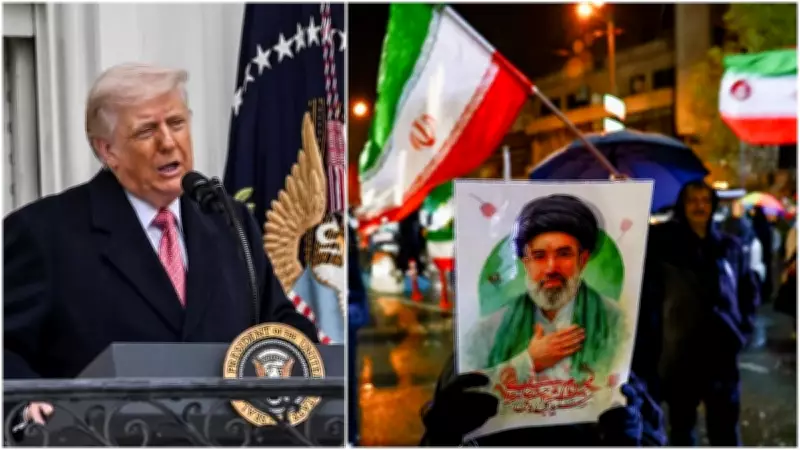
Iranian Embassies Launch Historical Defense Against Western Criticism
In a striking diplomatic exchange, Iranian embassies in South Africa and the United Kingdom have issued robust responses to perceived Western criticism, framing Iran not merely as a modern nation-state but as an enduring civilization with deep historical roots. The embassies leveraged social media platforms to articulate this perspective, drawing on ancient history to counter contemporary political rhetoric.
Civilizational Pride in the Face of Modern Scrutiny
The Iranian Embassy in South Africa posted a message on April 2, 2026, that directly addressed what it characterized as outdated perceptions of Iran. The embassy asserted, "At a time when you were still in caves searching for fire, we were inscribing human rights on the Cyrus Cylinder." This reference to the Cyrus Cylinder, an ancient artifact often cited as one of the earliest charters of human rights, serves to underscore Iran's long-standing contributions to global principles of justice and governance.
Further emphasizing Iran's resilience, the statement highlighted historical challenges: "We endured the storm of Alexander and the Mongol invasions and remained; because Iran is not just a country, it is a civilization." This narrative positions Iran as a survivor of major historical upheavals, suggesting a continuity and strength that transcends temporary political conflicts.

Countering Allegations with Symbolic Imagery
Simultaneously, the Iranian Embassy in the UK responded to what it labeled as "medieval rhetoric" from critics, specifically targeting individuals associated with what it termed the "Epstein class." This appears to be a pointed reference to Western elites embroiled in scandals, aiming to contrast Iran's historical integrity with perceived moral failings in American society.
The embassy's post expressed, "It’s a shame for American society that someone like this has become their voice." Accompanying this text was an image with the caption "Our stones answer you," likely alluding to ancient Iranian monuments or artifacts that symbolize the nation's enduring legacy. This visual and textual response reinforces the theme of Iran drawing strength from its historical and cultural heritage to address modern diplomatic tensions.
Broader Implications for International Relations
This exchange highlights a growing trend in diplomatic communications where nations leverage historical narratives to bolster their international standing. By invoking the Cyrus Cylinder and references to ancient invasions, Iran's embassies are crafting a narrative of civilizational pride and resilience. This approach not only defends against criticism but also seeks to reshape the global perception of Iran from a contemporary political actor to a timeless cultural entity.
The use of social media for such statements underscores the evolving nature of diplomacy in the digital age, where embassies can directly engage with global audiences. The responses from the Iranian embassies reflect a strategic effort to counter Western narratives by emphasizing Iran's historical contributions and enduring presence on the world stage.
As tensions in international relations persist, such historical defenses may become more common, with nations increasingly turning to their past to justify present actions and policies. This incident serves as a reminder of the powerful role that history and culture play in shaping modern diplomatic dialogues and perceptions.






