

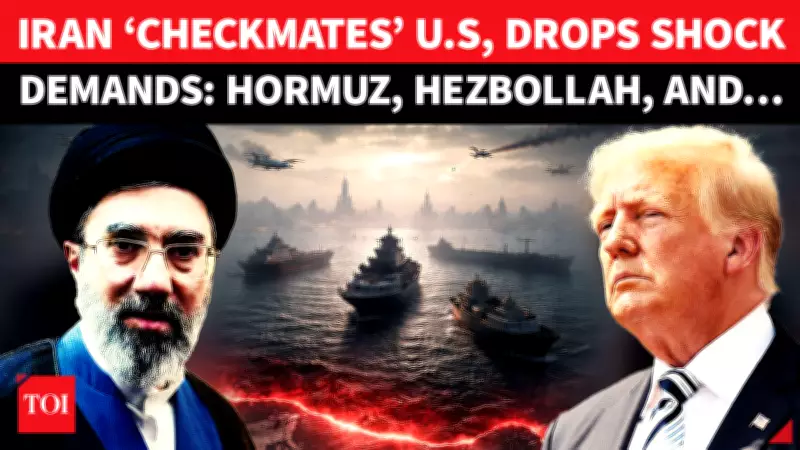
Iran's Hard Bargaining Shakes US Talks in Pakistan with Four Non-Negotiable Demands
In a dramatic turn of events, Iran has drawn a hard line at the negotiating table in Islamabad, laying out four non-negotiable conditions that could fundamentally reshape the future of the Middle East conflict. The high-stakes talks between the United States and Iran, mediated by Pakistan, have reached a critical juncture as Tehran's sweeping demands challenge the status quo.
Iran's Four Key Demands at the Islamabad Negotiations
Tehran's conditions, presented during the ongoing discussions, are comprehensive and far-reaching. First and foremost, Iran is demanding full sovereignty over the Strait of Hormuz, a critical global energy artery through which nearly 20% of the world's oil supply flows. This strategic waterway has long been a point of contention, and Iran's claim could have profound implications for global energy security.
Secondly, Iran insists on complete war reparations, seeking financial compensation for damages incurred during recent conflicts. Thirdly, Tehran demands the unconditional release of its frozen assets, which have been held by various nations due to sanctions and political disputes. Finally, Iran is calling for a region-wide ceasefire, including an immediate halt to fighting in Lebanon, where tensions with groups like Hezbollah have escalated.

US Response and Regional Implications
United States officials view these conditions as a major challenge to the negotiation process. Accepting Iran's demands could significantly shift the balance of power in the Middle East, potentially altering alliances and security dynamics. The talks, held under Pakistan's mediation, are occurring against a backdrop of simmering tensions across multiple fronts, from the Strait of Hormuz to Lebanon's conflict zones.
The timing of these demands is particularly sensitive, as global powers grapple with energy crises and regional instability. Iran's hard bargaining strategy reflects its determination to leverage its geopolitical position, using the Strait of Hormuz as a key bargaining chip. The demand for a ceasefire in Lebanon underscores Tehran's influence over proxy groups and its role in broader Middle Eastern conflicts.
Broader Context and Future Prospects
These negotiations come amid reports of increased military activity and diplomatic maneuvering in the region. For instance, recent incidents such as Hezbollah's rocket attacks on Israeli cities and logistical challenges in the Strait of Hormuz highlight the urgency of these talks. The involvement of Pakistan as a mediator adds a layer of complexity, given its historical ties with both the US and Iran.
As the discussions continue, the international community watches closely, aware that the outcome could either pave the way for de-escalation or lead to further confrontation. Iran's unwavering stance on its four conditions suggests that the path to a deal will be fraught with obstacles, requiring delicate diplomacy and compromise from all parties involved.






