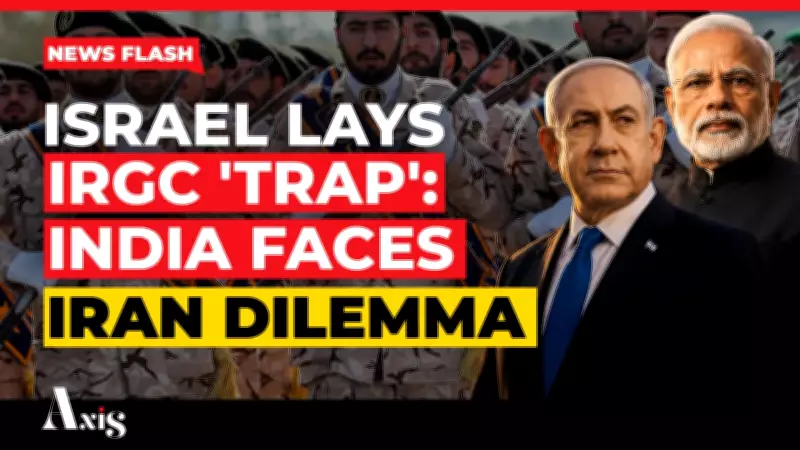
Israel has placed India in a difficult geopolitical position by asking New Delhi to officially designate Iran's Islamic Revolutionary Guard Corps (IRGC) as a terrorist organization. However, a major complication arises from the IRGC's control over large parts of the Strait of Hormuz, a critical energy chokepoint through which nearly 40 percent of India's energy supplies pass. At a time when Gulf tensions are escalating and global oil markets remain unstable, Iran has already assured safe passage to Indian vessels through the strait.
India's Strategic Dilemma
This situation places India in a strategic bind between two close partners: Israel and Iran. Despite growing Western pressure, India has refused to designate the IRGC. Tehran's leverage over the Strait of Hormuz significantly alters Delhi's calculations. External Affairs Minister S. Jaishankar's doctrine of multi-alignment is now facing one of its biggest real-world tests amid the ongoing Middle East crisis.
Key Factors at Play
- Energy Security: The Strait of Hormuz is vital for India's energy imports, and any disruption could severely impact the economy.
- Iran's Assurance: Tehran has guaranteed safe passage for Indian ships, creating a dependency that complicates any move against the IRGC.
- Western Pressure: The US and other allies have been pushing for a tougher stance on Iran, but India's energy needs force a cautious approach.
This exclusive report from Jerusalem breaks down why India has resisted the designation, how Iran's Hormuz leverage changes the equation, and why Jaishankar's multi-alignment strategy is under strain.

Conclusion
India's refusal to designate the IRGC highlights the delicate balance it must maintain between strategic partnerships and energy security. The outcome of this test will have significant implications for India's foreign policy in West Asia.