Jaishankar Champions Multipolar World Order and Institutional Reform at Munich Security Conference
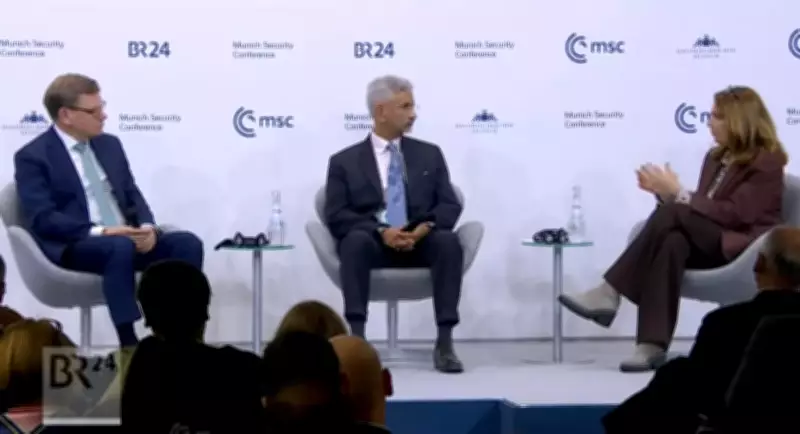
External Affairs Minister S. Jaishankar delivered a significant address at the Munich Security Conference in Germany, positioning India as a decisive and influential actor within an evolving multipolar international system. His remarks underscored India's assertive role in shaping global governance and economic diplomacy during a period of profound geopolitical transformation.
Urgent Call for United Nations Security Council Reform
In high-level meetings with G7 foreign ministers, Jaishankar pressed for urgent and comprehensive reform of the United Nations Security Council (UNSC). He argued forcefully that global institutions, established in a different era, must be restructured to accurately reflect contemporary power dynamics and geopolitical realities. The minister insisted that the current composition of the UNSC is outdated and does not represent the world's present-day economic and political landscape.
Economic Diplomacy: EU FTA and US Engagement as Pillars
Jaishankar highlighted India's robust economic diplomacy, spotlighting two key pillars: the newly concluded India-European Union Free Trade Agreement (FTA) and the expanding trade engagement with the United States. He framed these agreements as critical components of India's strategy to secure its economic interests and foster deeper integration with major global economies. The EU FTA, in particular, was presented as a landmark achievement that will enhance bilateral trade and investment flows.

Analyzing a Shifting Geopolitical Landscape
Describing the current international order as imperfect yet fundamentally intact, Jaishankar identified several accelerators of recent geopolitical shifts. He cited the COVID-19 pandemic, the ongoing conflict in Ukraine, and persistent turbulence in West Asia as key events that have hastened the redistribution of global influence and prompted nations to reassess their strategic postures.
Core Strategic Priorities for India
The minister outlined several core priorities for India's foreign and security policy in this complex environment:
- Enhanced Maritime Security: Securing vital sea lanes and ensuring freedom of navigation.
- Resilient Submarine Communications: Protecting critical undersea infrastructure.
- Diversified Strategic Partnerships: Building and maintaining a wide network of international alliances to ensure strategic autonomy and flexibility.
A Call for Agile and Assertive Foreign Policy
With Europe actively reassessing its own strategic posture and China's continued rise as a global power, Jaishankar emphasized the necessity for an agile, clear, and assertive Indian foreign policy. He called for flexibility in approach and clarity in objectives, arguing that India must proactively engage in shaping the next phase of the global order. His message was clear: in a multipolar world marked by uncertainty, decisive and confident diplomacy is paramount for safeguarding national interests and contributing to global stability.