Jaishankar meets Mongolian leadership to boost ties
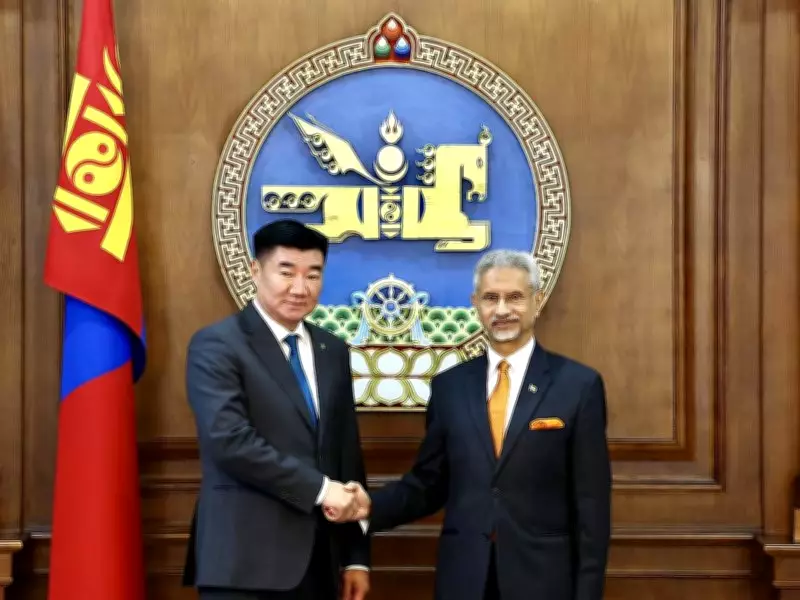
External Affairs Minister S Jaishankar on Monday held a series of high-level interactions in Ulaanbaatar aimed at further expanding bilateral cooperation between India and Mongolia during his ongoing official visit. The engagements included meetings with the Speaker of the State Great Khural, Sandag Byambatsogt, Education Minister L Enkh-Amgalan, and former President N Enkhbayar.
In a post on X, Jaishankar said he met the Speaker and welcomed his support for India-Mongolia parliamentary exchanges and friendship. "A pleasure to meet Speaker of the State Great Khural Sandag Byambatsogt today. Welcome his strong support for India - Mongolia parliamentary exchanges and friendship. Reiterated support to deepening our people - centric development partnership," he wrote.
Interactions with education minister and former president
The EAM also interacted with Mongolia's Education Minister L Enkh-Amgalan and former President N Enkhbayar, describing the engagements as important for strengthening bilateral ties. "Value their support for deepening our Strategic Partnership," EAM said on X.

Call on Mongolian President
Upon his arrival in Ulaanbaatar, Jaishankar called on Mongolian President Khurelsukh Ukhnaa. During the meeting, the EAM conveyed official greetings from President Droupadi Murmu and Prime Minister Narendra Modi. Reflecting on the momentum established during President Ukhnaa's visit to India last year, Jaishankar noted that the two leaders shared a common vision for the future of the partnership. "Value his guidance on advancing our strong cooperation in a wide range of sectors. Fully agree with him that the greatest friendship is spiritual friendship," Jaishankar stated in a post on X.
Bilateral talks with Mongolian foreign minister
Jaishankar held comprehensive bilateral talks with his Mongolian counterpart, Battsetseg Batmunkh. The discussions focused on transforming cordial ties into tangible economic outcomes. Key areas identified for enhanced cooperation include a review of ongoing bilateral development projects, new opportunities in the mining sector, potential collaborations in clean energy and agricultural processing, and sustained cooperation in education, security, and multilateral forums. "Delighted to meet FM Battsetseg Batmunkh in Ulaanbaatar. Our discussions reflected the warmth, strength and promise of our Strategic Partnership. Reviewed the progress in our cooperation in development projects, capacity building, culture, education, security and multilateral fora. Also spoke about opportunities in mining, clean energy and agri processing. As a third neighbour and a spiritual partner, India stands ready to advance its close and cordial ties with Mongolia," Jaishankar posted on X.
Visit to Gandan Monastery
As part of his engagements, Jaishankar also visited the Gandan Monastery, where he met Khamba Nomun Khan Geshe Lharampa D Javzandorj, the Chief Abbot. He highlighted the monastery's role in promoting cultural and spiritual ties between the two countries. "Glad to meet His Eminence Khamba Nomun Khan Geshe Lharampa D Javzandorj, Chief Abbot of Gandan Monastery, Mongolia. His blessings for deepening our cultural ties and people-to-people goodwill are deeply cherished," said Jaishankar.
Broader diplomatic tour
Jaishankar arrived in Mongolia on Monday for a state visit from June 22 to 23. On arrival, he was welcomed by the State Secretary Munktushig Ilkhanajav. His visit to Mongolia is part of a broader four-day tour that also includes South Korea. According to the Ministry of External Affairs (MEA), he will hold meetings with the leadership of both countries and discuss avenues for strengthening bilateral cooperation. The External Affairs Minister has embarked on a four-day visit to Mongolia and the Republic of Korea from June 22 to 25. India and Mongolia have long described their relationship through the lenses of being "Strategic Partners," "Spiritual Neighbours," and "Third Neighbours." Jaishankar's visit underscores India's commitment to this framework, emphasising that the relationship is built on a foundation of mutual trust and a shared desire for regional stability and economic integration.