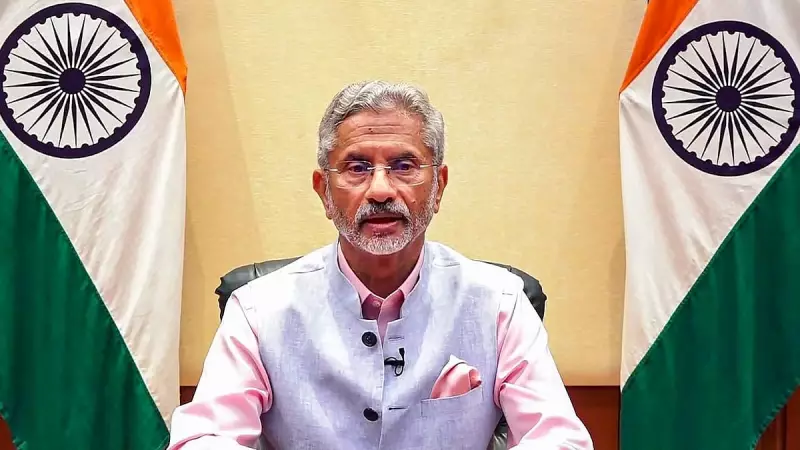
India's External Affairs Minister, Dr. S Jaishankar, has issued a stark warning about the growing danger posed by biological weapons. He emphasized that the world can no longer treat their potential misuse as a remote concern and called for a robust international framework to address this critical challenge.
Non-State Actors Pose a Clear and Present Danger
Speaking on December 1, 2025, Jaishankar highlighted a significant shift in the threat landscape. He stated that the "misuse" of biological weapons by non-state actors is no longer a distant possibility. This assessment points to the evolving nature of security threats, where advanced and dangerous technologies could fall into the hands of groups operating outside traditional state control.
The minister's remarks underscore a pressing need to rethink global security paradigms. The traditional focus on state-versus-state conflicts must now expand to include asymmetric threats where the tools of mass disruption are accessible to smaller, more elusive entities.

An Urgent Call for International Cooperation
In response to this emerging threat, Jaishankar stressed that no single nation can combat this challenge alone. He made a compelling case for enhanced international cooperation as the only viable path forward. A coordinated global effort is essential to develop preventive measures, strengthen monitoring mechanisms, and build collective response capabilities.
The proposed framework would likely involve intelligence sharing, joint research on countermeasures, and stronger diplomatic and legal instruments to prevent the proliferation of biological agents and related expertise. This aligns with India's consistent advocacy for multilateral solutions to transnational problems.
India's Stance and the Path Ahead
India, under Jaishankar's diplomatic leadership, has consistently positioned itself as a responsible stakeholder in global security. By raising this issue, India is seeking to galvanize the international community into action before a major crisis occurs. The call for a framework is a proactive step aimed at filling a potential gap in the global security architecture.
The minister's statement, made on December 1, 2025, serves as a timely reminder that technological advancements bring not only progress but also new vulnerabilities. Building resilience against biological threats requires sustained dialogue, trust among nations, and a shared commitment to safeguarding humanity from catastrophic harm.