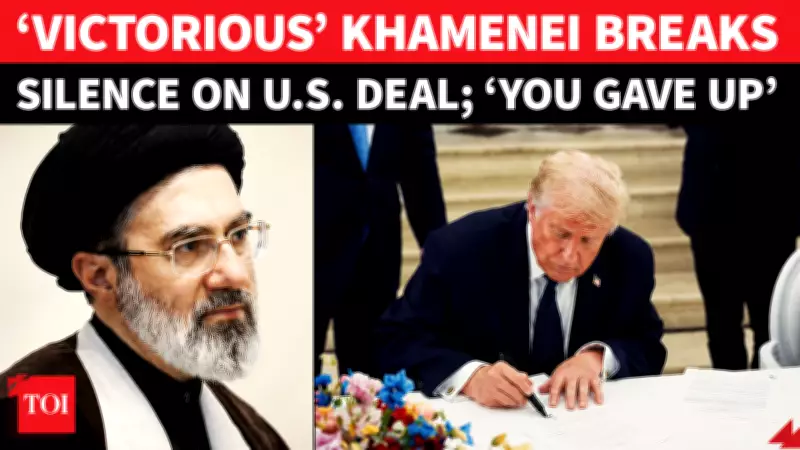
Iran's Supreme Leader Mojtaba Khamenei has declared that the United States 'couldn't keep up the fight' in his first address following the landmark agreement between Tehran and Washington. Speaking to the Iranian nation, Khamenei revealed that he authorized the memorandum of understanding signed by the Iranian and U.S. presidents, even though he personally held a different view on the accord.
Khamenei's Approval Despite Reservations
Khamenei stated that he gave the green light after receiving firm assurances from President Masoud Pezeshkian and senior officials that Iran's national rights and the interests of the so-called 'Resistance Front' would be fully protected. He emphasized that Pezeshkian, in his capacity as head of Iran's Supreme National Security Council, accepted responsibility for safeguarding Iran's interests and pledged not to yield to what Tehran considers excessive U.S. demands.
Strategic and Ideological Stance
The Supreme Leader stressed that any future direct negotiations with Washington would not signify acceptance of the United States' positions. He underscored Iran's determination to maintain its strategic and ideological stance while pursuing diplomatic channels. Khamenei's remarks come as the international community reacts to the historic deal, which has been met with both praise and criticism.

Khamenei's speech also touched on broader geopolitical dynamics, including the role of other global powers. He noted that the U.S. had been forced to the negotiating table due to its inability to sustain military pressure on Iran. This assertion aligns with Tehran's long-standing narrative that American aggression has been effectively countered by Iranian resilience.
Reactions and Analysis
The deal has sparked varied reactions worldwide. Some analysts view it as a pragmatic move by both sides to de-escalate tensions, while others remain skeptical about its long-term implications. The U.S. administration has hailed the agreement as a diplomatic victory, but Khamenei's comments suggest that Iran remains cautious about Washington's intentions.
In related developments, the deal has also drawn attention to the roles of other international actors, including China and Russia. Khamenei's mention of the Resistance Front highlights Iran's continued support for allied groups in the region, a point that may influence future negotiations.
As the situation evolves, all eyes will be on how the agreement is implemented and whether it leads to a broader rapprochement between Iran and the West. For now, Khamenei's message reinforces Iran's position that its core interests and ideological principles remain non-negotiable.