

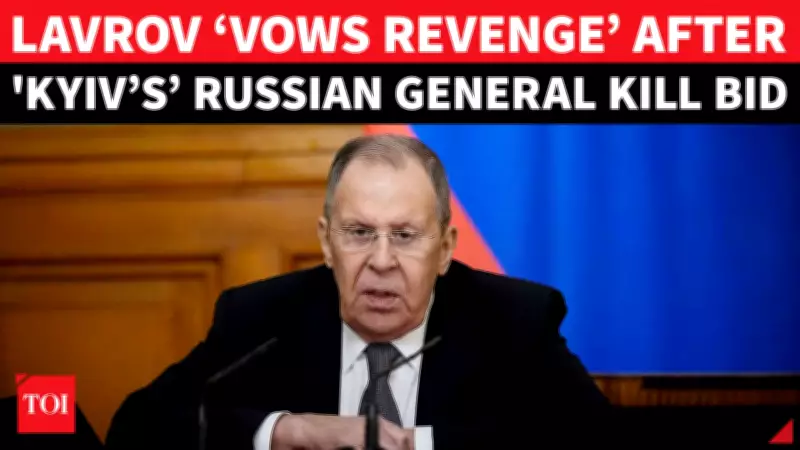
Lavrov Accuses Ukraine of 'Terrorist Act' Following Moscow Incident
Russian Foreign Minister Sergey Lavrov has issued a strong condemnation of Ukraine's leadership following what he described as a failed assassination attempt on a high-ranking Russian military official in Moscow. The incident occurred just hours before scheduled diplomatic negotiations, adding significant tension to already strained relations between the two nations.
Attack on Intelligence Official
The target of the alleged attack was Lieutenant General Vladimir Alekseev, who serves as the first deputy chief of Russia's main intelligence directorate. The incident took place near his residence on Moscow's Volokolamskoye Highway, a location that underscores the brazen nature of the operation.
According to official Russian statements, the assassination attempt occurred at a particularly sensitive diplomatic moment. Lavrov confirmed that the attack happened immediately before planned negotiations with Swiss and Organization for Security and Co-operation in Europe (OSCE) officials, though he declined to speculate on how this might affect the talks.

Lavrov's Official Response
When questioned by journalists about the incident, Lavrov provided a measured but firm response. "The decisions regarding this matter rest entirely with Russia's leadership," he stated, carefully avoiding direct commentary on potential retaliatory measures.
However, the foreign minister did not mince words when characterizing the event itself. "This was a clear terrorist act," Lavrov declared, directly implicating Ukrainian authorities in what he described as deliberate provocations designed to undermine ongoing peace negotiations.
Broader Diplomatic Implications
Lavrov's accusations extend beyond the immediate security incident to encompass broader geopolitical concerns. He suggested that Ukraine's leadership orchestrated the attack with multiple objectives in mind:
- To disrupt and potentially derail ongoing peace negotiations between Russia and Ukraine
- To influence Western nations that continue to provide military and financial support to Ukraine
- To create international incidents that could shift diplomatic momentum
The timing of the alleged assassination attempt is particularly noteworthy given the delicate stage of negotiations concerning Ukraine's future. Diplomatic sources indicate that multiple international parties have been working to facilitate discussions between Russian and Ukrainian representatives.
Security and Intelligence Context
Lieutenant General Vladimir Alekseev holds one of the most sensitive positions within Russia's intelligence apparatus. As first deputy chief of the main intelligence directorate, he would have access to classified information regarding Russian military operations, intelligence gathering activities, and strategic planning.
The attack on such a high-profile figure represents a significant escalation in the ongoing conflict between Russia and Ukraine, which has increasingly involved intelligence operations and covert actions alongside conventional military engagements.
Russian security services have reportedly launched a comprehensive investigation into the incident, though specific details about the perpetrators, methods used, and current status of the investigation remain undisclosed to the public.
International Reactions and Next Steps
While Lavrov has made clear accusations against Ukrainian leadership, international responses have been more measured. Diplomatic observers note that the incident comes at a critical juncture in Russia-Ukraine relations, with multiple channels of communication simultaneously active and fragile.
The involvement of Swiss and OSCE officials in the scheduled negotiations suggests continued international efforts to mediate between the conflicting parties, though this latest incident may complicate those diplomatic initiatives.
As the situation develops, attention will focus on several key areas:

- Official responses from Ukrainian authorities regarding Russia's accusations
- Potential impacts on the scheduled diplomatic negotiations
- Security measures implemented by Russian authorities following the incident
- International diplomatic efforts to prevent further escalation
The alleged assassination attempt and Lavrov's subsequent condemnation represent another volatile chapter in the ongoing conflict between Russia and Ukraine, with implications that extend far beyond their bilateral relationship to affect European security architecture and international diplomatic norms.





