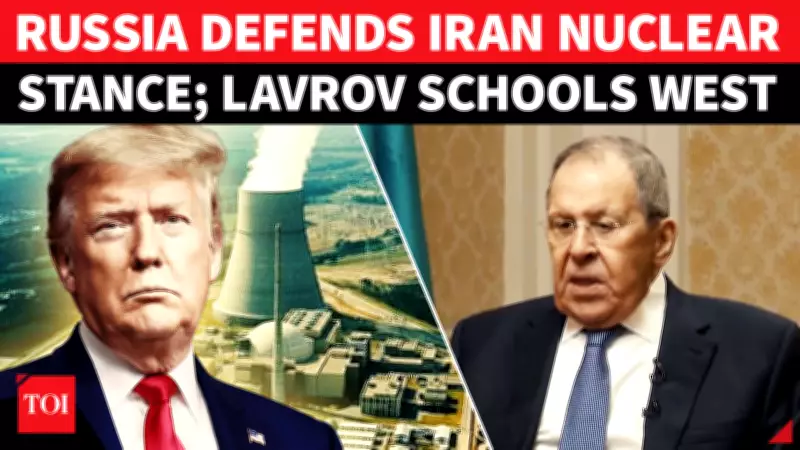
Lavrov Reaffirms Iran's Commitment to Peaceful Nuclear Energy Under International Supervision
In a significant diplomatic statement, Russian Foreign Minister Sergei Lavrov has declared that Iran is fully prepared to utilize nuclear energy exclusively for "purely fuel and energy needs" under the strict supervision of the International Atomic Energy Agency (IAEA). The remarks were made during an exclusive interview with Al Arabiya TV conducted in Moscow, highlighting Iran's ongoing openness to international oversight of its nuclear facilities.
Warning Against Politicization of IAEA Activities
Lavrov emphasized that while Tehran remains cooperative with international monitoring efforts, the IAEA must avoid what he termed the "politicisation" of its activities. This warning underscores growing concerns that external political pressures could compromise the agency's impartiality and effectiveness in verifying Iran's compliance with nuclear agreements.
The Russian Foreign Minister directly linked the current heightened tensions surrounding Iran's nuclear program to the United States' withdrawal from the 2015 nuclear deal in 2018 under then-President Donald Trump. Lavrov argued that this unilateral action by the U.S. administration significantly escalated regional instability and undermined diplomatic efforts to ensure Iran's nuclear activities remain peaceful.

Geopolitical Context and Renewed Diplomatic Strain
These comments arrive amid renewed diplomatic strain over Iran's nuclear program and escalating geopolitical friction between Washington and Moscow. The situation reflects broader international tensions as major powers navigate complex security dynamics in the Middle East.
Lavrov's intervention serves as a crucial reminder of Russia's ongoing diplomatic engagement with Iran and its commitment to maintaining dialogue channels regarding nuclear non-proliferation efforts. The statement reinforces Moscow's position as a key player in Middle Eastern diplomacy and nuclear security discussions.
The Russian Foreign Minister's remarks come at a particularly sensitive time when international observers are closely monitoring Iran's nuclear developments and the potential for renewed negotiations. His emphasis on IAEA supervision without political interference highlights a central point of contention in ongoing diplomatic exchanges between global powers.