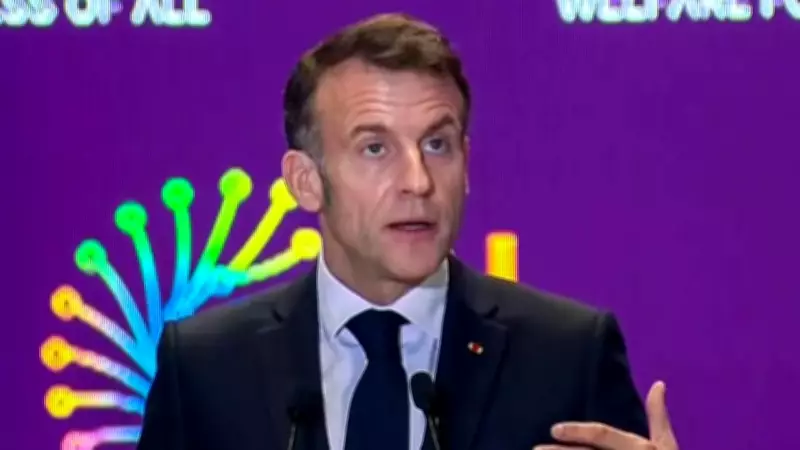
Macron Defends Rafale Deal, Emphasizes Strategic Benefits for India
French President Emmanuel Macron on Thursday robustly dismissed criticisms surrounding the Rafale fighter jet deal with India, asserting that the agreement fundamentally strengthens India's national capabilities. Speaking to reporters, Macron highlighted the deal's role in enhancing strategic coordination between the two nations and fostering job creation within India.
Commitment to Indigenous Manufacturing and Co-Production
"We are always increasing indigenous components. It's part of the dialogue between the company and your government. I don't see how people can criticise because it makes your country stronger, it increases the strategic coordination between us, and it creates more jobs here," Macron stated unequivocally. He further elaborated on France's dedication to localizing production, adding, "Very clearly, we are extremely committed to having the maximum number of Indian components and manufacturing the maximum number of critical devices in India."
Macron noted that India, as a customer, is keen on deepening this partnership through co-production. "The Indians, who are currently customers, want to co-produce with us; we have seen the Rafale here, but they want to co-produce combat aircraft in India. They want to handle more of the maintenance, which is legitimate," he explained, underscoring India's aspirations for greater self-reliance in defence manufacturing.

Background: The Defence Acquisition Council's Approval
This defence comes in the wake of a significant move by India's Defence Ministry earlier this month. The Defence Acquisition Council (DAC) approved the procurement of 114 Rafale fighter jets from France, a deal officials have described as the "mother of all defence deals." This clearance paves the way for one of the largest defence acquisitions in India's history, aimed at modernizing the Indian Air Force's fleet.
The approval marks a critical step in bolstering India's aerial combat capabilities, with the Rafale jets renowned for their advanced technology and multi-role functionality. The deal is expected to involve substantial technology transfer and local manufacturing components, aligning with India's "Make in India" initiative.
Strategic Implications and Economic Impact
The Rafale deal is not merely a procurement agreement but a strategic partnership with far-reaching implications:
- Enhanced Strategic Coordination: Macron emphasized that the deal deepens the strategic alignment between India and France, crucial for regional stability and counter-terrorism efforts.
- Job Creation and Skill Development: By increasing indigenous manufacturing and maintenance, the deal is projected to generate numerous high-skilled jobs in India's defence sector.
- Technological Advancement: The co-production and technology transfer aspects are set to boost India's domestic defence industry, reducing dependency on imports over time.
- Legitimacy of Indian Aspirations: Macron's remarks validate India's legitimate desire to manage more maintenance and production locally, fostering self-reliance.
Macron's defence of the Rafale deal underscores its perceived benefits beyond mere military hardware acquisition. It represents a collaborative effort to fortify India's defence infrastructure while strengthening bilateral ties. As the deal progresses, its impact on India's strategic autonomy and economic growth will be closely monitored by analysts and policymakers alike.