

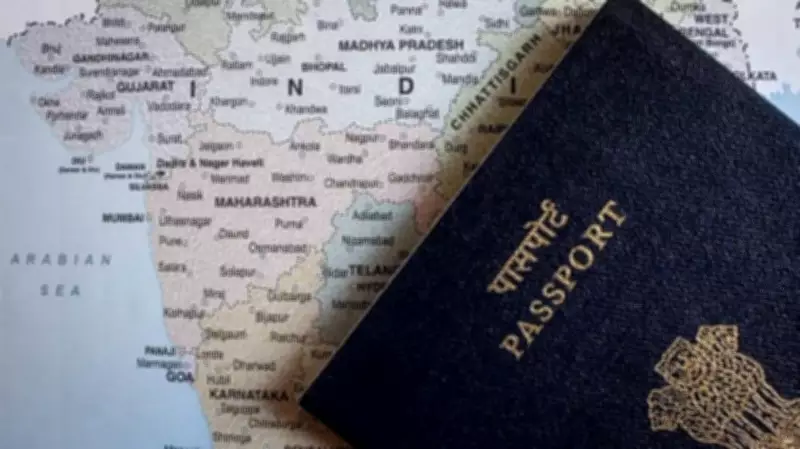
The Ministry of External Affairs (MEA) has stated that a passport is a travel document and not proof of citizenship, sparking widespread reactions from political leaders, celebrities, and the public. Shiv Sena (UBT) leader Aaditya Thackeray questioned the logic, asking whether non-Indians could be issued such a 'travel document'. The clarification has ignited a debate on what legally constitutes proof of Indian citizenship.
MEA's Stance on Passport and Citizenship
The MEA's position, as reported, asserts that while a passport is issued to Indian citizens, it does not serve as definitive proof of citizenship. This has led to confusion, as passports are commonly used as identity and nationality documents both domestically and internationally. The statement has prompted a series of queries from public figures and citizens demanding clarity on the official documents that certify Indian citizenship.
Reactions from Political and Public Figures
Aaditya Thackeray took to social media to express his concerns, posting three pointed questions: "If the MEA believes Passport is not a document of citizenship: 1) What do the police verify before granting a passport? 2) Does our country give passports as travel documents to non Indians as well? 3) Wouldn’t this announcement create doubts in the minds of other countries?" His tweet garnered widespread attention, reflecting public unease.

Veteran lyricist and poet Javed Akhtar also weighed in, calling the MEA's stance "absurd." He questioned whether passports are being issued to individuals without full verification of Indian citizenship. "The ministry of external affairs says that a passport is a document travel not the proof of citizenship. Really ??? . So are they providing this travel document to some people with out being totally convinced that this person is an Indian citizen ?? . It is absurd," Akhtar tweeted.
Other social media users joined the chorus, highlighting that Aadhaar cards, voter ID cards, and PAN cards are also not considered proof of citizenship. Chirag Barjatya tweeted, "Passport is not a document of Citizenship. Aadhar Card is not a document of Citizenship. Voter ID Card is not a document of citizenship. Then what is the proof?" Similarly, Parth Chaturvedi asked the MEA to confirm what exactly is a document of citizenship, noting that commonly held IDs are not accepted as such.
Legal and Administrative Implications
The MEA's statement raises significant questions about the legal framework governing citizenship documentation in India. Currently, the Citizenship Act, 1955, and the Passports Act, 1967, outline the issuance of passports, but there is no single universal document that serves as conclusive proof of citizenship. This has led to calls for the government to clarify the official documents that can be used to establish citizenship status, especially for purposes such as voting, travel, and government services.
The debate also touches on the National Register of Citizens (NRC) and the Citizenship Amendment Act (CAA), which have been contentious issues in Indian politics. Critics argue that the lack of a clear citizenship document undermines the rights of citizens and could lead to administrative confusion. Supporters of the MEA's position contend that a passport is primarily a travel document, and citizenship is determined by other means, such as birth records or citizenship certificates.
Social Media Reactions and Public Discourse
Social media platforms have been abuzz with reactions, memes, and discussions. One user, Lord Immy Kant, posted an image suggesting that the MEA's admission implies the nationality section in Indian passports is "officially screwed." Another user, chacha monk, posted a comparison: "You must be an Indian citizen to get a passport, but a passport won't prove your citizenship." Henry Singh questioned, "Then what is the proof of citizenship?" The hashtag #PassportNotProof trended briefly, indicating the public's engagement with the issue.
The MEA has not yet issued a follow-up clarification or responded to the specific queries raised by Thackeray, Akhtar, and others. The controversy is likely to continue as citizens demand a clear definition of citizenship proof in India.






