

Pentagon Official Dismisses Claims of Israeli Control Over US Iran Policy
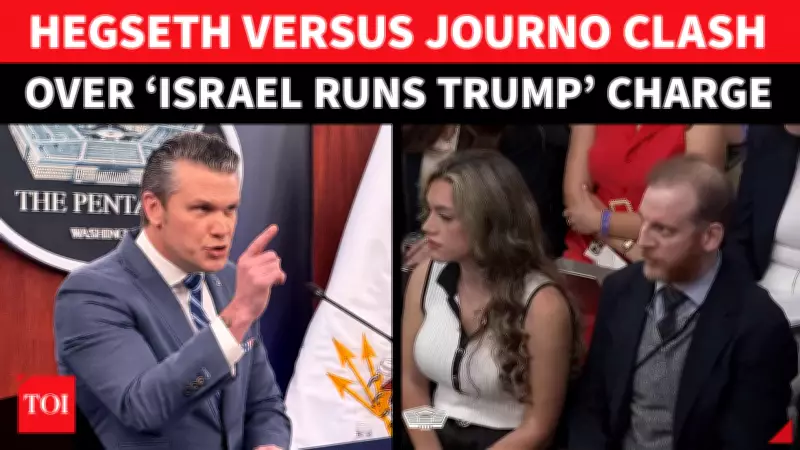
In a tense exchange that has captured Washington's attention, US War Secretary Pete Hegseth was directly confronted by a reporter questioning whether Israel is dictating American foreign policy toward Iran. The confrontation occurred as diplomatic efforts remain stalled and a fragile ceasefire between the US and Iran approaches its critical April 22 deadline.
Hegseth's Forceful Rejection of Israeli Influence Claims
When pressed specifically about whether Israel influenced President Trump's hardline "zero enrichment" stance regarding Iran's nuclear program, Hegseth responded with sharp dismissal. "President Trump makes decisions based solely on American interests," Hegseth insisted, categorically rejecting any suggestion of foreign influence on US policy formulation.
The exchange highlights growing scrutiny of US-Israel relations amid escalating tensions in the Middle East. Hegseth's forceful rebuttal came as Washington has significantly increased pressure on Tehran through a naval blockade targeting Iranian oil flows through the Strait of Hormuz, a move that has contributed to global market instability and heightened geopolitical anxieties.

Escalating Tensions as Ceasefire Deadline Approaches
With the April 22 ceasefire deadline rapidly approaching and diplomatic talks effectively stalled, fears of renewed military escalation between the United States and Iran are mounting. The current standoff represents one of the most precarious moments in US-Iran relations in recent years, with both sides maintaining hardened positions and showing little willingness to compromise.
The naval blockade implemented by Washington represents a significant escalation in pressure tactics, directly targeting Iran's crucial oil exports and economic lifelines. This aggressive posture has raised concerns among international observers about the potential for miscalculation or accidental confrontation that could spiral into broader conflict.
Broader Context of US-Israel Relations Under Scrutiny
The reporter's question about Israeli influence reflects broader debates within Washington policy circles about the nature of the US-Israel relationship and whether American interests are being adequately prioritized. This comes amid parallel controversies in Congress regarding arms supplies to Israel and failed attempts to impose sanctions, indicating a complex political landscape surrounding Middle East policy.
As the ceasefire deadline looms, the international community watches anxiously for signs of diplomatic breakthrough or military escalation. The situation remains fluid, with both Washington and Tehran maintaining publicly uncompromising positions while potentially exploring backchannel communications to avoid outright conflict.
The confrontation with Hegseth underscores the high-stakes nature of current US foreign policy decisions in the Middle East, where regional alliances, nuclear non-proliferation concerns, and global energy markets intersect in potentially explosive ways. With diplomacy faltering and military posturing intensifying, the coming days will prove critical in determining whether the fragile ceasefire can be extended or whether renewed hostilities will erupt.






