

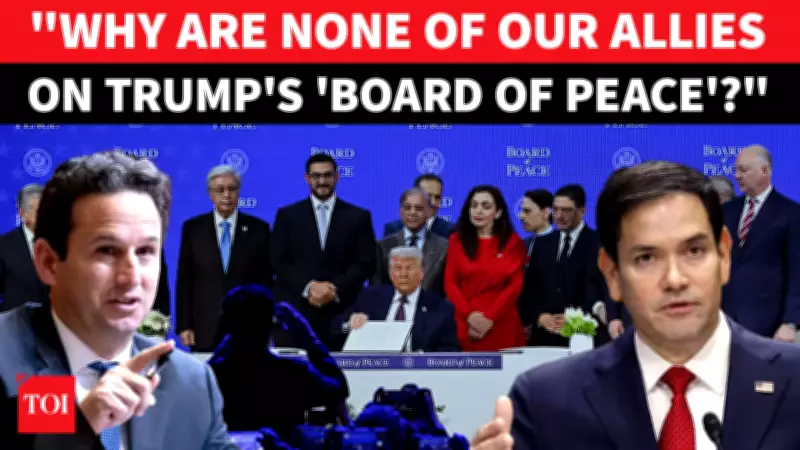
Rubio Confronted in Senate Over Trump's Controversial 'Board of Peace' Composition
During a tense session of the Senate Foreign Relations Committee hearing on Wednesday, Secretary of State Marco Rubio found himself at the center of a pointed inquiry regarding President Donald Trump's newly announced 'Board of Peace'. The hearing, which focused on US foreign policy challenges, took a dramatic turn when Senator Brian Schatz, a Democrat from Hawaii, directly questioned Rubio about the inclusion of nations considered adversaries of the United States on this board's list.
Schatz's Direct Challenge to the Secretary of State
Senator Schatz did not mince words as he pressed Rubio for an explanation. 'What the heck?' Schatz reportedly asked, demanding clarity on why the 'Board of Peace'—a initiative touted by the Trump administration to foster international dialogue and conflict resolution—features countries that are traditionally viewed as hostile to American interests. This line of questioning underscored the deep partisan divides and skepticism surrounding the administration's diplomatic strategies, particularly in an election year.
Rubio's Defense and the Broader Political Context
In response, Secretary Rubio, a seasoned politician known for his hawkish foreign policy stance, attempted to justify the board's composition. He argued that engaging with adversaries is sometimes necessary to achieve peace, drawing on historical precedents where diplomacy with rivals led to breakthroughs. However, critics, including Schatz, remain unconvinced, viewing the inclusion of such nations as a potential normalization of hostile regimes without clear strategic benefits for the US.

The exchange highlights the ongoing tensions within US politics over how to handle international relations under the Trump presidency. With the 2026 political landscape heating up, every move by the administration is scrutinized, and this hearing adds fuel to the debate over America's role on the global stage.
Implications for US Foreign Policy and Domestic Perception
This incident raises several critical questions about the future direction of US foreign policy:
- Strategic Diplomacy vs. Political Optics: Is the 'Board of Peace' a genuine effort to bridge gaps with enemies, or merely a political maneuver ahead of elections?
- Bipartisan Concerns: How will this affect bipartisan support for foreign initiatives, especially with Democrats like Schatz voicing strong objections?
- Global Reactions: What message does this send to allies and adversaries worldwide about US consistency and commitment to its stated principles?
As the hearing concluded, it was clear that the controversy over the 'Board of Peace' is far from over. With related news stories dominating headlines—from impeachment threats against Trump aides to clashes over Venezuela and nuclear warnings—this episode adds another layer to the complex tapestry of US domestic and international politics. Observers will be watching closely to see how Rubio and the administration navigate these choppy waters in the coming months.






