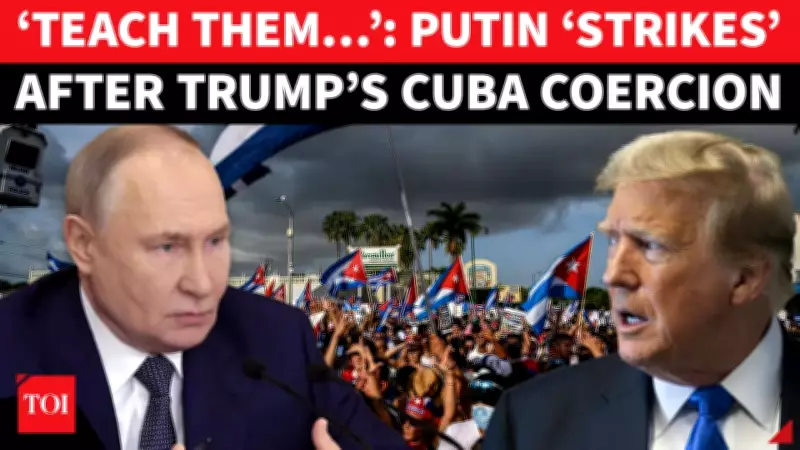
Russia Condemns U.S. Blockade, Pledges Solidarity with Cuba During High-Level Moscow Talks
In a significant geopolitical development, Russia has issued a strong rebuke against the United States' renewed pressure on Cuba's energy supplies, declaring unwavering support for its long-standing ally during a critical diplomatic visit to Moscow. The high-level talks between Cuban Foreign Minister Bruno Rodriguez Parrilla and Russian officials, including Foreign Minister Sergey Lavrov and President Vladimir Putin, come as Cuba grapples with severe fuel shortages and widespread blackouts that have crippled daily life on the island nation.
Moscow's Firm Stance Against U.S. Pressure
Russian officials have explicitly condemned what they describe as an American blockade targeting Cuba's oil flows, a policy that has intensified under the administration of former U.S. President Donald Trump. During the meetings in Moscow, Russian representatives emphasized their commitment to standing by allies in times of crisis, with one official stating, "Moscow does not abandon its allies" in a clear message of solidarity. This declaration underscores Russia's strategic positioning against U.S. foreign policy initiatives in Latin America.
Humanitarian Fuel Shipments Under Discussion
Reports emerging from diplomatic circles suggest that Russia is actively considering sending shipments of crude oil and refined fuel to Cuba as part of a humanitarian assistance package. This potential move would directly counter U.S. efforts to restrict energy supplies to Havana and could provide crucial relief for Cuba's struggling economy and infrastructure. The discussions highlight how energy resources have become a central battleground in the ongoing geopolitical tensions between Moscow and Washington.

Deepening Russia-Cuba Alliance Amid Global Tensions
The visit by Cuba's top diplomat to Moscow represents more than just routine diplomacy—it signals a strengthening of the strategic partnership between Russia and Cuba at a time when both nations face increasing pressure from Western powers. The talks covered not only immediate energy concerns but also broader coordination on international issues where both countries share similar perspectives. This alignment is particularly significant given Cuba's historical role in Latin American politics and Russia's expanding global influence.
Broader Implications for Regional and Global Dynamics
These developments occur against a backdrop of shifting geopolitical alignments that extend beyond the immediate Russia-Cuba-U.S. triangle. The energy crisis in Cuba has become a focal point in larger struggles over influence in Latin America, with Russia positioning itself as a reliable alternative to Western powers. Meanwhile, the United States continues to employ economic pressure as a primary tool of foreign policy, creating complex challenges for nations caught between competing global powers.
The situation highlights how energy security has become intertwined with diplomatic strategy in contemporary international relations. As Cuba seeks to navigate its current crisis, the support from Russia provides not just material assistance but also political validation for Havana's resistance to U.S. policies. This dynamic is likely to influence how other nations in similar positions approach their relationships with both Moscow and Washington in the coming years.