Trump Insists on Personal Role in Iran Succession, Rejects Khamenei's Son
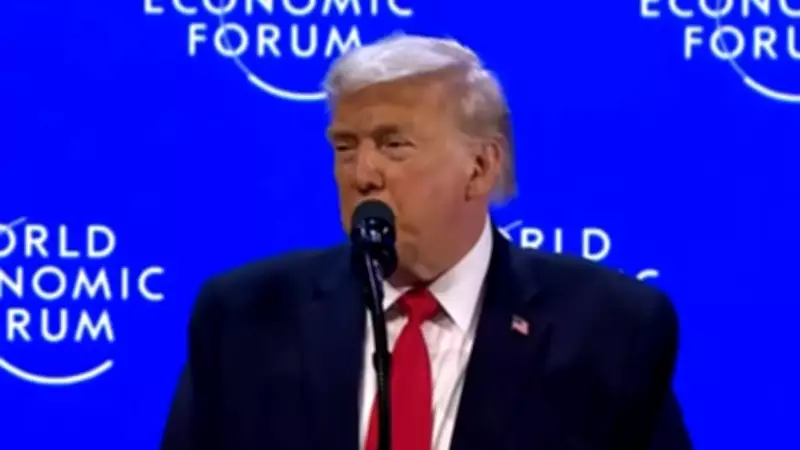
In a striking revelation, former President Donald Trump has declared that he must be personally involved in selecting Iran's next supreme leader following the assassination of Ali Khamenei. Trump made these comments during an exclusive eight-minute phone conversation with Axios, marking his second discussion with the outlet to elaborate on his wartime strategies and geopolitical maneuvers.
"Unacceptable" Successor
Trump specifically identified Mojtaba Khamenei, the 56-year-old son of the slain supreme leader, as the most probable successor but firmly rejected this outcome. "Khamenei's son is unacceptable to me," Trump stated emphatically. "We want someone that will bring harmony and peace to Iran." He characterized Mojtaba as a "lightweight" and expressed concerns that his leadership would perpetuate his father's policies, potentially forcing the United States back into conflict within five years.
The Iranian regime has delayed announcing a new supreme leader for several days, though political statements on Thursday suggested an imminent declaration. Trump dismissed these efforts, remarking, "They are wasting their time."

Drawing Parallels with Venezuela
Trump drew direct comparisons to his administration's intervention in Venezuela, where Vice President Delcy Rodriguez assumed power after U.S. forces captured Nicolás Maduro in January. "I have to be involved in the appointment, like with Delcy in Venezuela," Trump explained. He praised Rodriguez's leadership, noting that "the oil is beginning to flow" following Interior Secretary Doug Burgum's visit to Caracas and Rodriguez's announcement of mining law reforms.
In his State of the Union address, Trump had hailed Venezuela as "our new friend and partner," highlighting that the U.S. received over 80 million barrels of oil since the Maduro operation.
U.S. Military Campaign and Official Denials
Trump's comments coincide with a significant U.S. military campaign launched on Saturday, targeting Iran's missile capabilities, nuclear program, and naval forces. Defense Secretary Pete Hegseth and other U.S. officials have explicitly denied that the operation aims for "regime change," instead focusing on degrading Iran's military assets.
When questioned on Tuesday about potential replacements for Khamenei, Trump told reporters at the White House, "Most of the people we had in mind are dead." Mojtaba Khamenei, a hardline cleric with strong ties to the Islamic Revolutionary Guard Corps but no prior public office experience, has emerged as the frontrunner despite the lack of a formal announcement.
Regional Tensions and Israeli Actions
Amidst this turmoil, Israel bombed an Iranian building in Qom on Tuesday, targeting the clerical body responsible for selecting the next supreme leader in an attempt to disrupt the succession process. This action underscores the escalating tensions in the region, further complicated by recent naval incidents.
Iran has accused the United States of sinking the warship IRIS Dena, which was hosting Indian Navy personnel, with a torpedo attack. Iranian officials warned that the U.S. would "bitterly regret" this action. Additionally, a second Iranian warship is reportedly heading towards Sri Lanka, raising concerns about potential targeting following the submarine attack.
The geopolitical landscape remains volatile as Trump's insistence on influencing Iran's leadership adds a new dimension to the ongoing conflicts and diplomatic maneuvers in the Middle East.