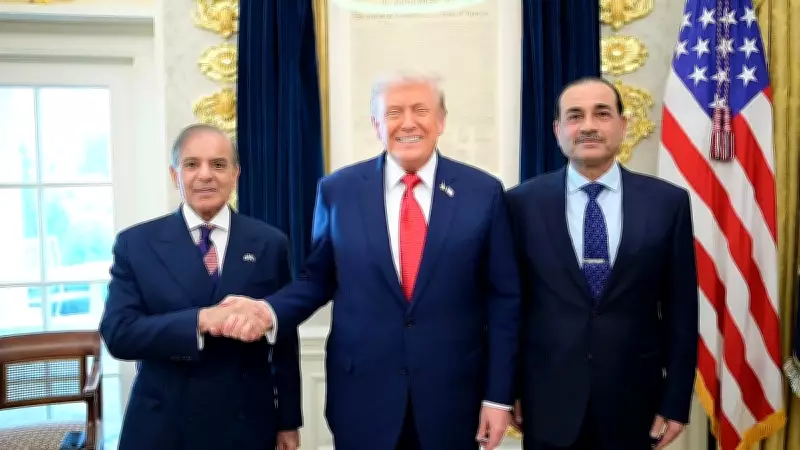
Former US President Donald Trump has once again stirred controversy by extending an invitation for the Abraham Accords that mentions Pakistan's army chief General Asim Munir instead of Prime Minister Shehbaz Sharif. The post, shared on social media, has reignited debates about the balance of power between Pakistan's military and the constitutional office.
Invite details spark debate
The invitation, which references the Abraham Accords—a series of normalization agreements between Israel and Arab nations—specifically names General Asim Munir as the invitee from Pakistan. This has raised eyebrows as diplomatic invitations are typically extended to the head of state or government, not the military chief. The omission of Prime Minister Shehbaz Sharif has been interpreted by many as a reflection of the military's perceived dominance in Pakistan's political landscape.
Reactions and implications
Political analysts and social media users have been quick to comment on the development. Some view it as an inadvertent mistake by Trump's team, while others see it as a deliberate acknowledgment of the military's influence. The incident underscores the ongoing tension between civilian and military institutions in Pakistan, where the military has historically wielded significant power in foreign and domestic policy.

The Abraham Accords, brokered by the Trump administration in 2020, aimed to reshape Middle East diplomacy. Pakistan has not formally recognized Israel, but the mention of its military chief in this context has fueled speculation about backchannel communications or shifting alliances.
As of now, neither the Pakistani government nor the military has officially responded to the invitation. The debate continues over whether this is a diplomatic gaffe or a reflection of ground realities in Pakistan's power structure.