

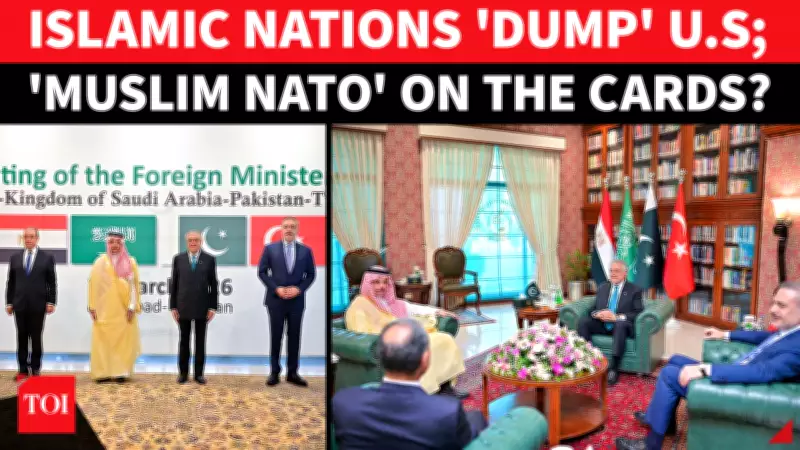
Turkey Hosts Pivotal Islamic QUAD Summit Amid Regional Security Concerns
A quiet yet potentially transformative diplomatic initiative is currently underway in Turkey, where Ankara is preparing to host high-level talks that could fundamentally reshape the security architecture of the Middle East. According to multiple reports, key Muslim-majority nations including Pakistan, Saudi Arabia, and potentially Egypt are expected to convene to explore a new framework for enhanced security cooperation across the region.
Exploring a New Security Framework
While officially described as coordination talks, these discussions are being interpreted in strategic circles as the preliminary outline of a broader security alignment that has often been referred to as a potential "Muslim NATO." This initiative comes at a time of significant regional churn, with various geopolitical tensions creating an urgent need for cohesive security structures among Muslim-majority nations.
The timing of these talks is particularly noteworthy, occurring against a backdrop of escalating regional conflicts and shifting alliances. The participating nations represent some of the most influential powers in the Islamic world, suggesting that any agreement reached could have far-reaching implications for Middle Eastern security dynamics.

Potential Implications and Strategic Considerations
If successful, this security framework could establish a formal mechanism for military cooperation, intelligence sharing, and joint defense initiatives among participating countries. Such an alliance would mark a significant departure from the current fragmented security arrangements in the region and could potentially counterbalance existing power structures.
The concept of a "Muslim NATO" has been discussed in various forms for years, but this represents one of the most concrete diplomatic efforts to bring the idea to fruition. Turkey's role as host underscores Ankara's growing ambitions as a regional power broker and its desire to shape security arrangements in its immediate neighborhood.
Strategic analysts note that the success of this initiative will depend on several factors, including the ability to reconcile differing national interests among participants, establish clear operational parameters, and navigate complex relationships with existing global powers and regional actors.
As these preliminary talks unfold in Turkey, the international community will be watching closely to see whether this diplomatic initiative can translate into a substantive security framework that addresses the complex challenges facing the Middle East today.






