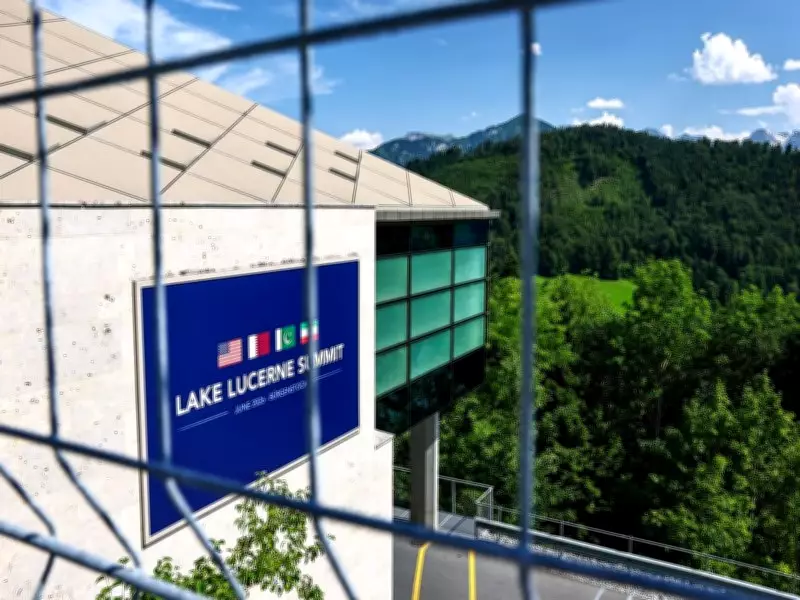
The first round of technical talks between the United States and Iran in Switzerland, held under a 14-point memorandum of understanding (MoU), was dominated by discussions on maintaining the ceasefire in Lebanon, ensuring the continued opening of the Strait of Hormuz, and addressing key aspects of a potential nuclear agreement, Axios reported, citing a US diplomat familiar with the negotiations.
Talks Held in Multiple Formats
According to Axios, the talks began on Sunday morning and continued throughout the day in multiple formats. The discussions covered a range of critical issues aimed at de-escalating tensions in West Asia.
Lebanon Ceasefire and Deconfliction
One of the key issues discussed was the situation in Lebanon, focusing on "deconfliction mechanisms" and "enforcing the ceasefire" amid Israeli strikes on the southern side of the country. The US diplomat emphasized the importance of maintaining stability in the region.

Strait of Hormuz Concerns
The discussions also addressed concerns surrounding the Strait of Hormuz, a strategically important global shipping route, after recent Iranian statements suggesting the possibility of its closure. "We made clear we want to ensure it remains fully open. We made good progress on that front," the US diplomat told Axios.
Nuclear Agreement Elements
Axios further reported that the negotiations covered "all elements" of the prospective nuclear agreement between Washington and Tehran. The diplomat indicated that discussions included implementation-related matters connected to the 14-point MoU signed last week, aimed at ensuring all parties are on the same page.
Framework for Continued Talks
The parties also discussed a framework for continuing negotiations at both the political and technical levels. "The parties also discussed a plan for how to keep talks going both on the political level and between the technical teams," the diplomat said, as quoted by Axios.
Optimism After First Round
Reflecting on the overall atmosphere, the US diplomat expressed optimism about the progress achieved. "All four parties seem pleased with how the talks went today. The mediators are helping both sides work through things. We feel this initial round of talks is setting us up for trust-building going forward," the diplomat said.
Next Steps
Talks involving senior political leadership are expected to conclude on Monday, while technical teams are likely to remain in Switzerland to continue discussions aimed at advancing the negotiations.
Temporary Roadblock Reported
Earlier, CNN, citing an Iranian source, reported that negotiations between the US and Iran hit a temporary roadblock but have not completely collapsed in Switzerland's Burgenstock. According to CNN, diplomatic efforts are continuing behind the scenes despite recent tensions, including threats made by US President Donald Trump on Sunday. The source said that while formal negotiations stalled for the moment, back-channel discussions are actively underway to encourage both sides to return to the table.
First Round Suspended for Internal Consultations
The first round of high-level technical talks was suspended after 80 minutes to allow delegations to conduct "internal consultations," according to Iran's Fars news agency. US Vice President JD Vance convened in Switzerland with senior Iranian officials on Sunday to mark the commencement of high-level diplomatic efforts aimed at finding a complete solution to the crisis in West Asia.
US Readiness to Transform Relations
During the talks, mediated by Pakistan and Qatar, Vance articulated Washington's readiness to "fundamentally transform" its relations with Tehran, relaying a directive from Trump encouraging both parties to turn "a new leaf" in their diplomatic engagement. The discussions, which include key stakeholders, primarily address Tehran's nuclear programme and critical obstacles within the framework of a fragile interim agreement, including the operational status of the Strait of Hormuz.