

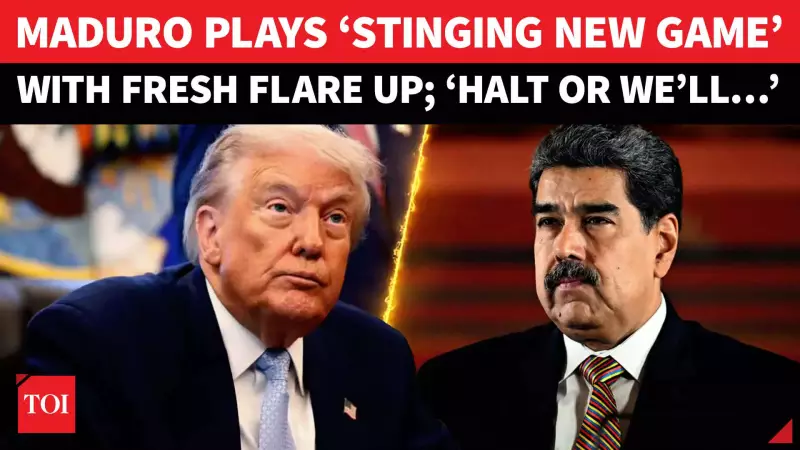
Venezuela has launched a fierce diplomatic and legal offensive against the United States, condemning a series of deadly military operations in the Caribbean and accusing the International Criminal Court (ICC) of turning a blind eye. The move comes amid escalating tensions following controversial statements by former US President Donald Trump.
National Assembly Convenes Extraordinary Session
Venezuela's National Assembly is preparing for an extraordinary session. This decisive step was announced by the President of the Assembly, Jorge Rodríguez. He revealed plans to form a special commission with a critical mandate: to investigate alleged extrajudicial executions linked to recent US military actions in the region.
The push for an official probe follows harrowing accounts from the families of victims. These families have reportedly faced intimidation, adding a layer of alleged human rights abuses to the already volatile situation. The government in Caracas has expressed its profound frustration with the International Criminal Court, condemning what it calls a deafening silence and inaction from the global judicial body.

The Stark Human Toll of Naval Operations
The scale of the military engagements is detailed in stark numbers. According to reports, 22 vessels have been targeted in operations since September this year. The human cost of these actions is devastating, with 83 individuals killed in the incidents.
Legal experts and critics of the operations are raising alarms. They warn that the use of force employed in these missions may violate principles of international law. The allegations suggest that the actions could constitute unlawful force, bypassing judicial oversight and due process.
Geopolitical Tensions Reach a Boiling Point
The dispute between Caracas and Washington intensified significantly after a provocative move by Donald Trump. The former US President publicly urged commercial airlines to avoid Venezuelan airspace. This advisory effectively suggested a blockade of the country's skies, a move interpreted as a severe economic and security threat.
The government of President Nicolás Maduro responded with sharp condemnation, framing Trump's statement as an act of aggression. This exchange has further inflamed long-standing Caribbean tensions, pulling focus back to the fraught geopolitical standoff between the US and Venezuela. The combination of military actions, high casualties, and inflammatory rhetoric has created a crisis that now demands international scrutiny.
As Venezuela's National Assembly gears up for its investigation, the world watches to see if the ICC will break its silence. The outcome could set a significant precedent for accountability in international conflicts and the application of global human rights law.






