

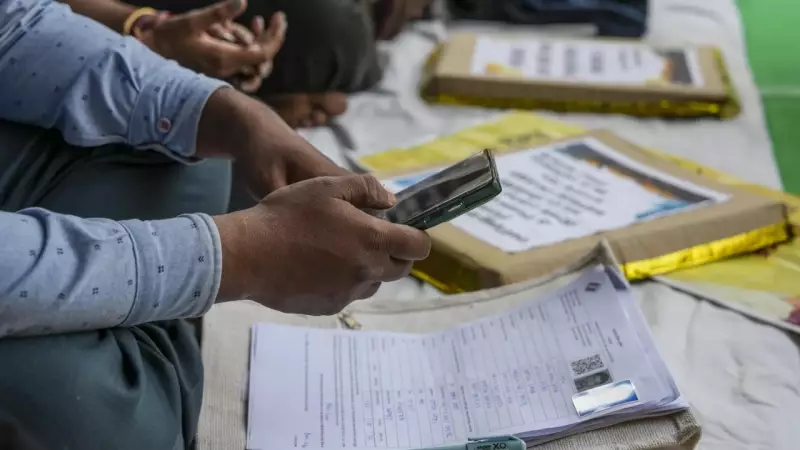
The Election Commission of India (ECI) has firmly rejected allegations of mass deletion of genuine voters during its ongoing Special Intensive Revision (SIR) of electoral rolls in several states. In a detailed counter-affidavit filed before the court, the poll body labeled the claims as "highly exaggerated, speculative and politically motivated."
ECI's Strong Rebuttal in Court
In an 81-page affidavit submitted on November 26, the Commission responded to a petition filed by TMC MP Dola Sen and others. The ECI, represented by its Secretary Pawan Diwan, sought the dismissal of petitions challenging the SIR exercise. The affidavit argued that the narrative of widespread disenfranchisement, particularly in West Bengal, was being "amplified to serve vested political interests."
The Commission underscored that its authority to conduct such revisions is firmly rooted in the Constitution. "Under Article 324 of the Constitution, the superintendence, direction and control of the preparation of electoral rolls for, and the conduct of, all elections to Parliament and to the Legislature of every state are vested in the Election Commission of India," the affidavit stated.

Constitutional Powers and Process Defended
The ECI elaborated that a combined reading of Articles 324 and 326 of the Constitution, along with relevant sections of the Representation of the People Act, 1950, and the Registration of Electors Rules, empowers it to assess voter eligibility, including citizenship. This process is deemed essential for upholding the constitutional right to vote.
"The guidelines issued with respect to the SIR exercise are constitutional and in the interest of maintaining the purity of electoral rolls, which is a pre-requisite for free and fair elections that form a basic feature of the Constitution," the poll panel asserted. It emphasized that the SIR aims to weed out ineligible persons, thereby enhancing electoral integrity.
Procedure Clarified and Concerns Dismissed
The Commission clarified that the revision is a "cooperative and participatory exercise." It explained that only those voters who cannot trace their eligibility back to the last nationwide SIR conducted in 2002 are required to sign enumeration forms and potentially submit documents later if requested.
The affidavit further stated that eligibility under Article 326—based on citizenship, age, residency, and lack of disqualification—is presumed unless contrary information is received. Therefore, it dismissed allegations of arbitrary action or violation of Article 14 (right to equality) as "misconceived."
Addressing specific court cases, the ECI told the court it would be "loath to countenance the highly speculative and exaggerated contentions" regarding mass disenfranchisement in Tamil Nadu. It affirmed being fully cognizant of its responsibilities and taking all possible measures to ensure no eligible voter is excluded.
The pan-India SIR was launched via an order dated June 24, starting with Bihar. Phase II, covering 12 states including Tamil Nadu, West Bengal, and Uttar Pradesh, began after a follow-up order on October 27. The court had sought separate responses from the ECI on pleas filed by the DMK, CPI(M), the West Bengal Congress unit, and TMC leaders, challenging the SIR in their respective states.






