New Delhi: After languishing in bureaucratic limbo for more than ten years, one of Delhi's most vital water infrastructure initiatives—the Chandrawal water treatment plant under the Delhi Water Supply Improvement Project (DWSIP)—is finally surging forward. This breakthrough comes after a prolonged period marred by policy indecision, repeated tender cancellations, and procedural lapses that had stalled progress.
Renewed Momentum to Combat Water Crisis
The revived momentum is being hailed as a critical step toward addressing the capital's escalating water scarcity, curbing transmission losses, and guaranteeing reliable round-the-clock supply to some of its most densely populated neighborhoods. Senior government officials revealed that the project encountered obstacles shortly after its initial approval.
Historical Context and Master Plan
In September 2011, the Japan International Cooperation Agency conducted an exhaustive study to enhance Delhi's water supply system, culminating in the Water Supply Master Plan-2021. Based on this blueprint, the Chandrawal command area—encompassing Old Delhi, New Delhi Municipal Council zones, Civil Lines, Karol Bagh, Patel Nagar, Rajinder Nagar, Kamla Nagar, Malkaganj, Naraina, and adjacent localities—was earmarked for a comprehensive upgrade under DWSIP. This ambitious project is designed to benefit approximately 22 lakh people, representing nearly 11% of Delhi's populace, spread across 96 square kilometres.

Financial Boost and Government Action
Acknowledging the project's urgency, the Centre has allocated an additional Rs 380 crore in the Union Budget for 2026-27, categorizing it as an externally aided initiative. "The project underwent expedited governmental review, leading to a proposal to escalate the Delhi government's share from Rs 313.8 crore to Rs 713.3 crore; Rs 399 crore was subsequently sanctioned by the state council of ministers in November 2025," an official disclosed. Following this, the Delhi Jal Board awarded contracts for packages 3 and 4, focused on enhancing the water supply network, in December.
New Plant and Enhanced Capacity
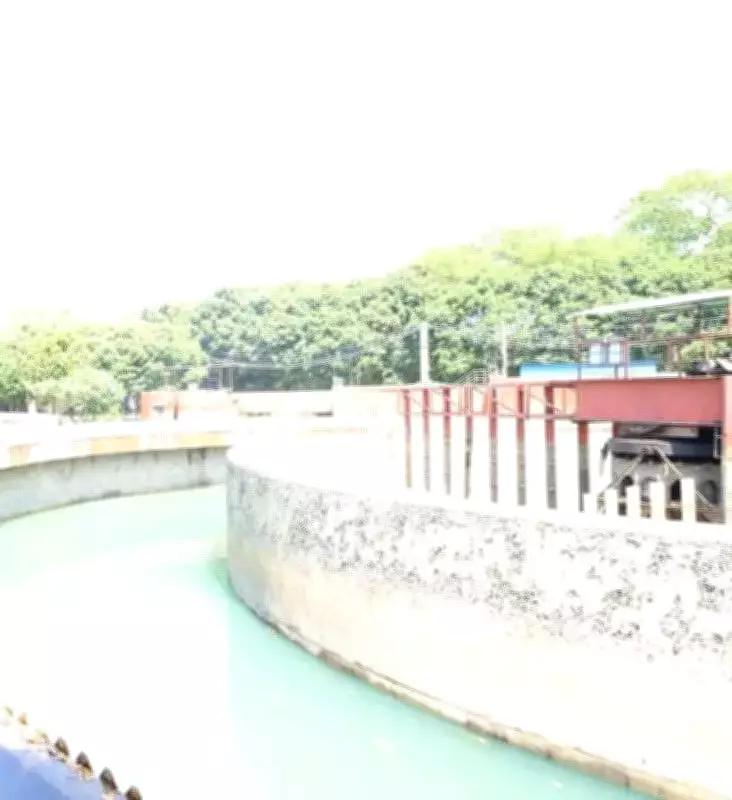
Chief Minister Rekha Gupta announced that a cutting-edge 105 MGD (million gallons per day) water treatment facility is under construction at Chandrawal, with an investment of Rs 599 crore, slated for commissioning this year. Water Minister Parvesh Verma emphasized that the new plant will substantially bolster Delhi's capability to treat raw water with elevated ammonia levels—a persistent issue that has disrupted supply in recent times. Presently, two existing plants at Chandrawal deliver about 90 MGD of water. With the new plant's activation and the refurbishment of current infrastructure, Chandrawal's total output is projected to soar to nearly 160 MGD.
Addressing the Last-Mile Challenge
DWSIP also prioritizes resolving the "last-mile" dilemma. Under this scheme, water distribution pipelines are being replaced at an expense of Rs 1,331 crore across the west, east, and central Chandrawal zones. This endeavor spans nine assembly constituencies and targets:
- Minimizing leakages
- Preventing contamination
- Ensuring uniform water pressure
Additionally, underground reservoirs will be fortified, water meters installed, and grievance redressal centres established, with the goal of slashing non-revenue water from 30-45% to under 15%.
Broader Strategy for Delhi's Water Deficit
Chandrawal's resurgence forms part of a wider strategy to narrow Delhi's expanding water shortfall. With a population surpassing 2.5 crore, the capital necessitates around 1,250 MGD of water, yet the existing supply from nine treatment plants is confined to 990-1,000 MGD. Capacity augmentations in recent years have been negligible, even as demand persistently climbs. To bridge this gap, the Jal Board has blueprinted three new water treatment plants at Iradat Nagar near Narela, Chhatarpur, and Najafgarh, which will cumulatively contribute 235 MGD. Concurrently, long-term raw water security is being pursued through proposed dams in Himachal Pradesh and Uttarakhand, including the Giri, Kishau, and Lakhwar Vyasi projects.

Recent Challenges and Future Outlook
The imperative for resilient treatment and distribution networks was highlighted by recent ammonia surges in the Yamuna River, which compelled facilities like Wazirabad and Chandrawal to function below capacity, resulting in reduced supply to numerous city sectors. The Chandrawal project's advancement signifies a pivotal move toward sustainable water management, aiming to fortify Delhi's infrastructure against such vulnerabilities and secure a more dependable water future for its residents.