

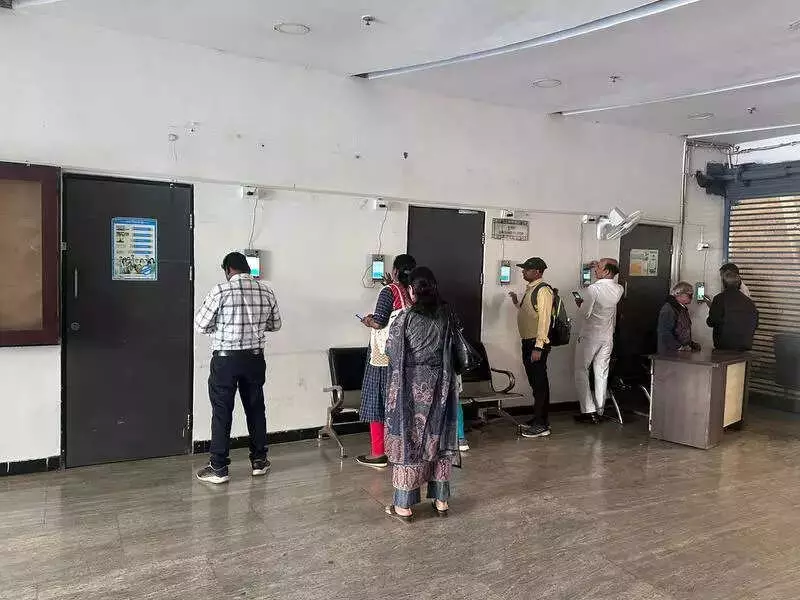
In a significant move to modernize administration, the Chhattisgarh government has ordered the implementation of an Aadhaar-enabled biometric attendance system for senior officials at the state secretariat. This marks the first such initiative since the state's formation in 2000.
New Attendance System: Key Details and Rollout Plan
The directive, issued by the General Administration Department (GAD), mandates the system for all officers from the rank of Under Secretary and above at the Mahanadi Bhavan state secretariat. The new rule comes into force from December 1. Initially, it will cover approximately 250 officers.
A government official stated that the primary goal is to enhance efficiency and transparency in daily operations. A trial run for the Aadhaar-enabled biometric attendance system (AEBAS) has been active since November 20 to ensure a smooth transition.

How the High-Tech System Will Function
The system requires officers to log their attendance twice daily: once upon arrival ('in') and again at departure ('out'). Two methods will be available:
- Thumb-based device: Aadhaar-enabled biometric terminals installed at the secretariat's main entry gates for thumbprint verification.
- Facial verification system: An Aadhaar-based facial recognition feature accessible via smartphones, allowing officers to mark entry and exit remotely.
This secure setup ensures that only authorized personnel can mark attendance, directly addressing common issues like late arrival, unscheduled absences, and early departure from work.
State-Wide Expansion and Expected Impact
The government has outlined an ambitious expansion plan for the biometric attendance system. Following the secretariat launch, the system will be extended to all directorates across the state in January. Subsequently, it will be rolled out to all district-level government offices.
This phased expansion is projected to eventually impact around 3.5 lakh (350,000) officers and employees throughout Chhattisgarh. Officials believe the automated system will eliminate manual errors in attendance records, simplify monitoring, and enable direct action against habitual delays without valid cause.
Driving Governance Through Technology
The automation of attendance management is expected to expedite administrative processes, save significant time, and foster improved discipline. The state government views this as a crucial step toward achieving greater transparency and operational efficiency in governance.
By linking attendance directly to Aadhaar, the system aims to create a more accountable and streamlined work environment in the public sector, setting a new standard for government office management in the state.






