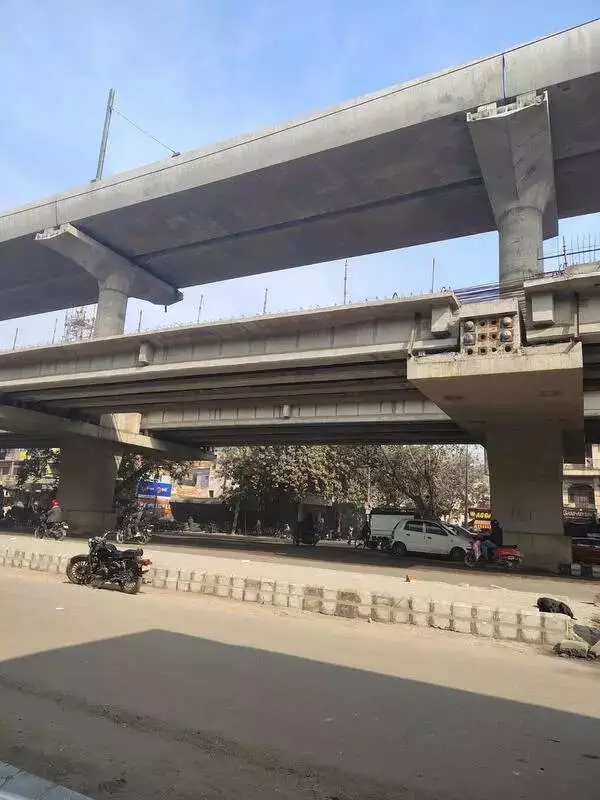
Delhi Metro Achieves Milestone with First Double-Decker Viaduct Completion
New Delhi witnesses a significant infrastructure advancement as the Delhi Metro Rail Corporation (DMRC) announces the readiness of the city's inaugural double-decker viaduct. This pioneering structure, spanning 1.4 kilometers between Bhajanpura and Yamuna Vihar metro stations on the upcoming Maujpur-Majlis Park corridor, is now prepared for train operations. However, the connecting ramp for vehicular traffic is scheduled for completion within this year, marking a phased approach to full functionality.
Transformative Infrastructure for Northeast Delhi
The Bhajanpura to Yamuna Vihar viaduct promises to reshape the urban landscape of northeast Delhi, navigating through densely populated residential areas. As an integral component of the 12.3-kilometer Maujpur-Majlis Park corridor—an extension of the existing Pink Line—this project represents a crucial step in Delhi's metro network evolution. A DMRC official confirmed that construction on this corridor has concluded, with trial runs currently underway and safety inspections by the Commissioner of Metro Rail Safety (CMRS) already completed.
"Construction of the ramp for the road section of the double-decker viaduct, which was pending, is now being taken up since tree-cutting permission in that area was just received and will be completed this year itself," the official stated, highlighting recent regulatory progress that enables finalization of this segment.

Additional Double-Decker Viaducts Nearing Completion
Simultaneously, two more double-decker viaducts are progressing toward completion this year. The second structure, measuring 2.2 kilometers between Azadpur and Ashok Vihar metro stations, forms part of the Janakpuri West and RK Ashram Marg corridor—an extension of the Magenta Line. DMRC officials report active construction, with foundation works advancing in the ramp section and girder erection progressing on the independent flyover segment.
"Major work is being taken up in the ramp section, in which foundation works are in progress. Further erection of girders is also in progress in the section of the independent flyover. This will also be ready this year itself," confirmed the official. The entire 29.3-kilometer RK Ashram-Janakpuri West corridor will commence operations in phases during the next financial year.
The third and longest double-decker viaduct, stretching 2.4 kilometers between Sangam Vihar and Ambedkar Nagar metro stations, will become part of the 23.6-kilometer Tughlakabad to Aerocity corridor, designated as the new Golden Line. Construction activities include ongoing development of integrated metro piers and viaduct spans, with steady progress reported.
Phase IV Expansion and Future Corridors
These double-decker viaducts constitute essential elements of DMRC's ambitious Phase IV expansion, which originally envisioned six new corridors covering 112.4 kilometers and incorporating 94 stations. The three priority corridors each feature one double-decker viaduct, employing an innovative design where vehicles utilize the lower deck while metro trains operate on the upper deck.
Recent developments include the December commencement of construction on the 8.3-kilometer Saket G Block–Lajpat Nagar corridor, an extension of the new Golden Line. This corridor will introduce India's first three-coach train service specifically designed for short-distance urban travel, serving as a critical transportation link in south Delhi.
Looking ahead, construction on two remaining corridors—Inderlok to Indraprastha (Green Line extension) and Rithala–Narela–Kundli (Red Line extension)—will initiate this year. Furthermore, the Union Cabinet has recently approved three additional corridors as part of the expansion: RK Ashram Marg to Indraprastha, Tughlakabad to Kalindi Kunj, and Aerocity to Terminal 1.
Network Enhancement and Circular Route Formation
Once operational, the Maujpur to Majlis Park corridor will enable the Pink Line to become the first circular route within the DMRC network, significantly improving connectivity across Delhi. This strategic development aligns with broader efforts to enhance urban mobility, reduce traffic congestion, and provide sustainable transportation alternatives for the capital's residents.

The double-decker viaducts represent engineering marvels that optimize limited urban space while delivering multimodal transportation solutions. As Delhi continues to expand its metro infrastructure, these projects underscore the city's commitment to innovative urban planning and sustainable development.