

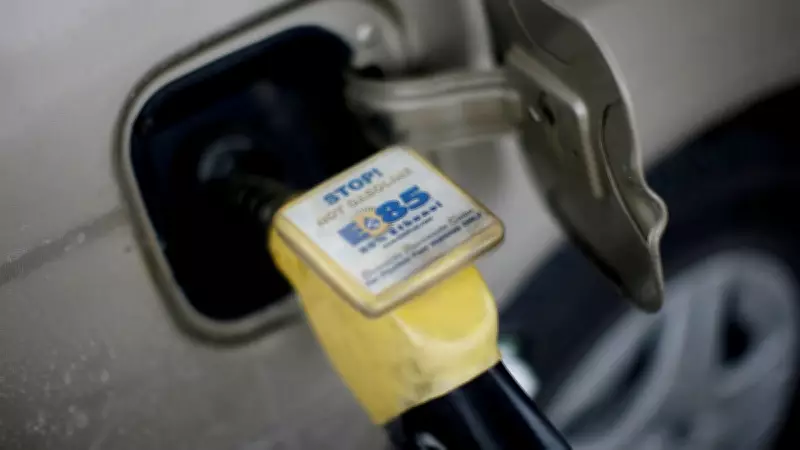
The Indian government has officially clarified that using E20 petrol—a blend of 20% ethanol with petrol—does not void vehicle insurance policies, countering widespread myths. In a statement, the government described E20 as a "globally accepted practice" and assured motorists that their insurance coverage remains valid irrespective of the fuel type used.
Government Clarification on Insurance Validity
The clarification came after concerns emerged on social media and among vehicle owners that using E20 fuel could lead to insurance claims being rejected. The government emphasized that no insurance policy in India stipulates a specific fuel type as a condition for coverage. "Insurance contracts are based on the vehicle's roadworthiness and compliance with legal requirements, not on the fuel blend used," an official statement read.
According to the Ministry of Petroleum and Natural Gas, E20 is approved under the Bureau of Indian Standards (BIS) specifications, and all vehicles compliant with BS6 norms are designed to run on E20 fuel without any modifications. The government also pointed out that several countries, including Brazil and the United States, have successfully implemented higher ethanol blends without insurance complications.

Economic and Environmental Benefits of Ethanol Blending
The ethanol blending programme has been a cornerstone of India's energy security strategy. The government highlighted that the initiative has helped India save over Rs 1.4 lakh crore in foreign exchange by reducing the country's dependence on crude oil imports. This figure underscores the significant economic impact of blending ethanol, which is produced domestically from sugarcane and other biomass.
In addition to forex savings, ethanol blending reduces greenhouse gas emissions, contributing to India's climate goals. The government noted that the programme also supports farmers by providing a stable market for sugarcane and other feedstock, thereby boosting rural incomes.
Addressing Public Concerns
To address lingering doubts, the Ministry of Road Transport and Highways issued an advisory stating that insurance companies cannot deny claims solely on the grounds of fuel type. The advisory urged insurers to educate their customers and refrain from spreading misinformation. "Any attempt to reject claims based on E20 usage will be treated as a violation of regulatory norms," the advisory warned.
Automakers have also confirmed that vehicles manufactured after April 2023 are compatible with E20 fuel. Older vehicles may require minor adjustments, but the government has assured that retrofitting kits are available at minimal cost.
Global Precedence and Future Plans
The government reiterated that E20 is part of a phased roadmap to increase ethanol blending to 20% by 2025-26, aligning with global best practices. Brazil, for instance, has used E20 and higher blends for decades without any adverse impact on vehicle insurance or performance. The United States also mandates E15 and allows E20 in flex-fuel vehicles.
In conclusion, the government's clarification aims to dispel myths and encourage the adoption of E20 fuel, which is crucial for reducing oil imports and promoting sustainable energy. Motorists are advised to ignore unsubstantiated claims and continue using E20 without fear of insurance complications.






