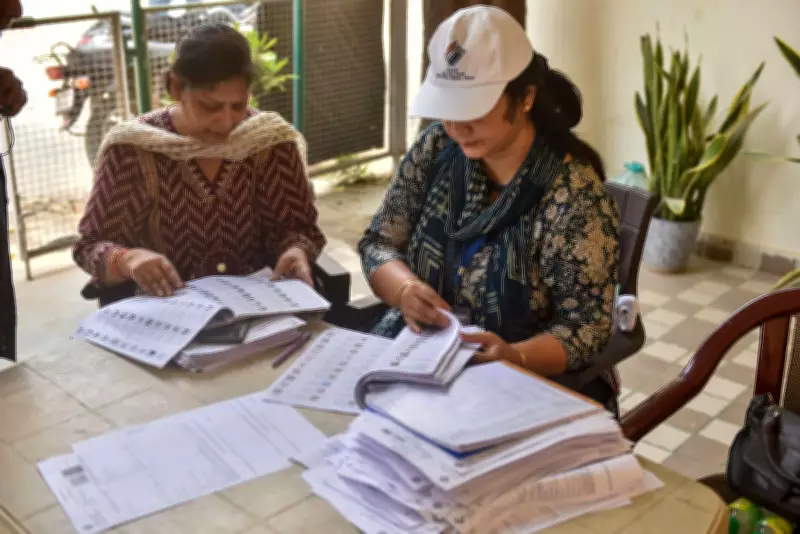
Haryana's ongoing special intensive revision (SIR) of electoral rolls has exposed a stark urban-rural divide, with Gurgaon and Faridabad emerging as the two worst-performing districts in the state in the distribution of enumeration forms (EFs). According to data released by the chief electoral officer as of 4 pm on Saturday, approximately 1.4 crore forms were distributed across the state, covering 70.6% of Haryana's 2 crore voters. However, the pace in the two National Capital Region (NCR) districts remains far below the state average.
Gurgaon and Faridabad trail significantly
Gurgaon recorded the second-lowest coverage in Haryana, with booth level officers (BLOs) distributing 7.5 lakh forms among 15 lakh voters — a coverage of just 48.61%. Faridabad fared even worse, with 6.9 lakh forms distributed among 18 lakh voters, translating to a mere 36.83% coverage. In absolute terms, more than 8 lakh voters in Gurgaon and nearly 12 lakh in Faridabad have yet to receive forms, representing a significant gap in the state's two largest urban centres.
Rural districts outperform urban centres
In contrast, several districts have already crossed the 80% mark. Kaithal topped the state at 87.77%, followed by Yamunanagar (85.87%), Karnal (84.41%), and Jind (83.26%). Even large-electorate districts such as Hisar and Sonipat have achieved over 75% coverage. The disparity highlights the challenges of urban enumeration.

Urban geography blamed for slow progress
Election officials attribute the slow progress in the NCR districts to the complexities of urban geography. “High-rise residential complexes, gated communities, migrant populations, locked houses and the absence of residents during daytime hours have made door-to-door outreach more difficult compared to rural districts,” an official said. The chief electoral officer has directed BLOs across Haryana to intensify field visits and ensure courteous interaction with voters. District election officers have also been instructed to take strict action against anyone obstructing BLOs in the discharge of their duties.
Focus on weekend outreach and RWAs
With the state average already above 70%, officials are now focusing on weekend outreach and increased engagement with resident welfare associations (RWAs), housing societies, and local representatives to accelerate coverage in Gurgaon and Faridabad in the days remaining before the revision exercise concludes. The goal is to bridge the gap and ensure that all eligible voters are included in the final electoral rolls.