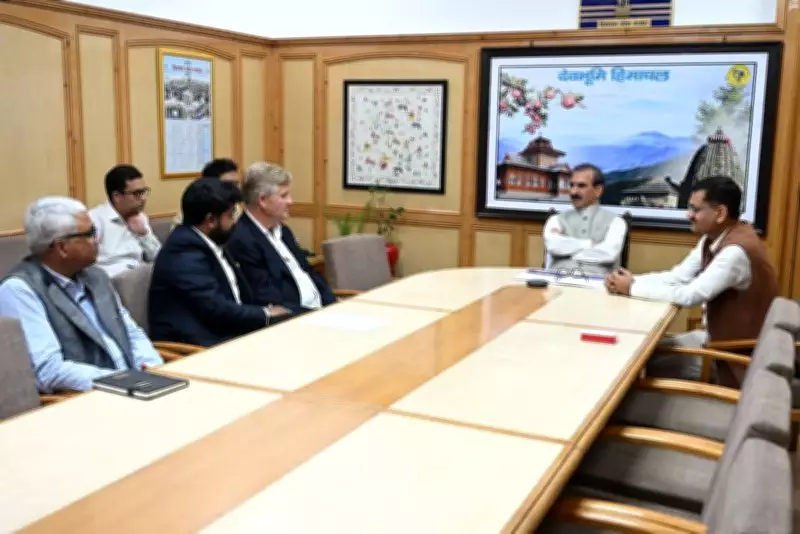
Chief Minister Sukhvinder Singh Sukhu on Tuesday announced that India's first biochar plant, being established at Neri in Hamirpur district, will generate employment opportunities, promote sustainable forest resource management, and help Himachal Pradesh earn carbon credits while strengthening its green economy.
Carbon credits and economic impact
Reviewing the project's progress, the Chief Minister said the plant is expected to generate around 28,800 carbon credits over its operational period, contributing significantly to environmental conservation and economic development. He added that the initiative would create livelihood opportunities for local communities and enhance public awareness about environmental protection.
Tripartite agreement and project details
The biochar plant is being set up under a tripartite agreement signed in August last year between Dr YS Parmar University of Horticulture and Forestry, Nauni, the Forest Department, and ProClime Services Private Limited, Chennai. Two biochar plants are proposed under the agreement: one at Neri and another at Jahu in Hamirpur district.

The project will utilize biomass such as pine needles, lantana, bamboo, and other plant-based material to produce biochar. Biomass collected from local sources is being purchased at Rs 2.50 per kg, along with performance-based incentives for maintaining quality, thereby providing an additional source of income to local residents.
Part of larger climate-smart programme
Sukhu said the initiative forms part of the HIM Evergreen Integrated Climate-Smart Agriculture and Agro-forestry Programme, which aims to integrate trees into farming systems, improve resilience, and create long-term economic opportunities for farming communities. Covering 50,000 hectares of agricultural landscapes across the state, the programme is expected to bring 13.5 million tonnes of carbon dioxide emissions under management.
The programme will also improve soil health, enhance biodiversity, and strengthen farm resilience through carbon sequestration. Advanced technologies such as GIS, remote sensing, and digital data collection systems aligned with international carbon market standards will be used for monitoring.
Expert support
Former Executive Director of UNEP and ProClime Advisory Board member Erik Solheim said the organisation remained committed to combining scientific expertise with practical implementation to address the global climate crisis.