

India Declares Full Self-Reliance in Nuclear Power Technology
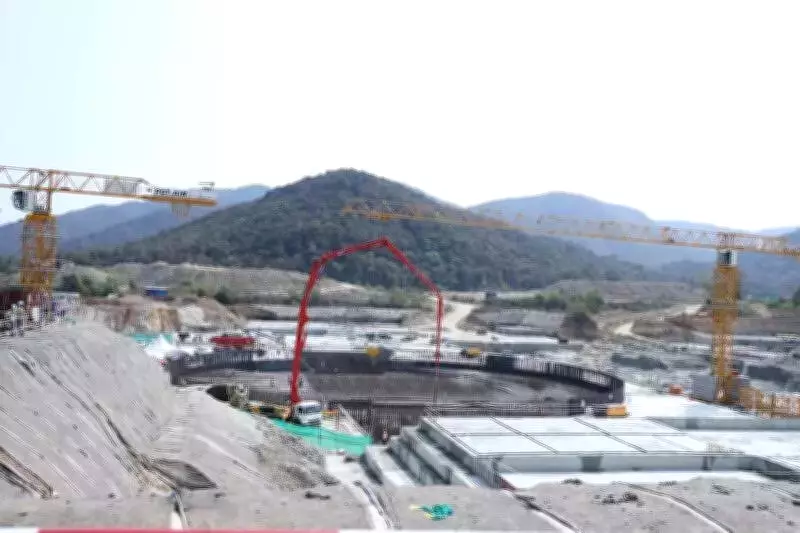
In a landmark announcement, India has achieved complete self-reliance by adopting fully indigenous technology and equipment for the installation and maintenance of nuclear power plants. Ajit Kumar Mohanty, chairman of the Atomic Energy Commission and secretary of the Department of Atomic Energy, made this declaration during the First Pour of Concrete ceremony for nuclear power generation units 5 and 6 at Kaiga in Karnataka on Sunday.
Ambitious Targets for Nuclear Energy Expansion
The country has set an ambitious goal to produce 100 gigawatts of nuclear power by 2047. To contribute to this vision, the Nuclear Power Corporation of India Limited (NPCIL) has established a target of 54 gigawatts. This expansion will involve a diverse mix of reactor technologies, including Pressurised Heavy Water Reactors (PHWRs), Light Water Reactors, and newly introduced Small Modular Reactors (SMRs). Preliminary work on these technologies is already underway on an experimental basis, with the highest priority given to safety and quality in nuclear power production.
Innovative Strategy for Kaiga Units 5 and 6
The proposed units 5 and 6 at Kaiga are expected to reach the power generation stage in approximately 60 months. For the first time, this project is being implemented using an innovative strategy that involves only a few mega EPC (engineering, procurement, and construction) packages, such as the nuclear island, turbine island, and nuclear equipment. This streamlined approach enables faster project execution, better coordination between various packages, and completion in minimal time and cost.

State-of-the-Art Indigenous Reactors
Kaiga Units 5 and 6 are state-of-the-art, indigenous 700MW PHWRs featuring advanced safety measures, which place them among the safest nuclear plants in the world. Similar units are already successfully operating at KAPS-3 in Gujarat and RAPP-7 in Rajasthan, demonstrating the reliability of this technology.
Boosting Capacity with Atmanirbhar Bharat Vision
Materials and equipment for the project will be supplied by domestic industry partners, and the work will be carried out by Indian contractors, aligning with the government's Atmanirbhar Bharat vision. Currently, four 220MW units at the Kaiga site are operating with a total installed capacity of 880 MW. After the completion of Units 5 and 6, the total capacity here will increase significantly to 2,280MW.
Key Highlights of the Announcement
- Self-Reliance Achievement: India has fully indigenized nuclear power plant technology, supporting the Atmanirbhar Bharat initiative.
- Future Goals: Targeting 100GW by 2047, with NPCIL contributing 54GW through a mix of reactor types like PHWRs, LWRs, and SMRs for enhanced efficiency and safety.
- Kaiga Expansion: Units 5 and 6 (each 700MW) will boost the site's capacity from 880MW to 2,280MW, using streamlined EPC packages for faster, cost-effective delivery.
- Safety Emphasis: Advanced features ensure these are among the world's safest reactors, with similar units already operational in other states.
- Timeline: Expected commissioning in about five years from the February 2024 inauguration.
On this occasion, NPCIL chairman and managing director Bhuvan Chandra Pathak, Kaiga site director B Vinod Kumar, and Kaiga Units 5 and 6 director Kulkarni, along with several NPCIL Kaiga officials, were present to witness this significant milestone in India's nuclear energy journey.






