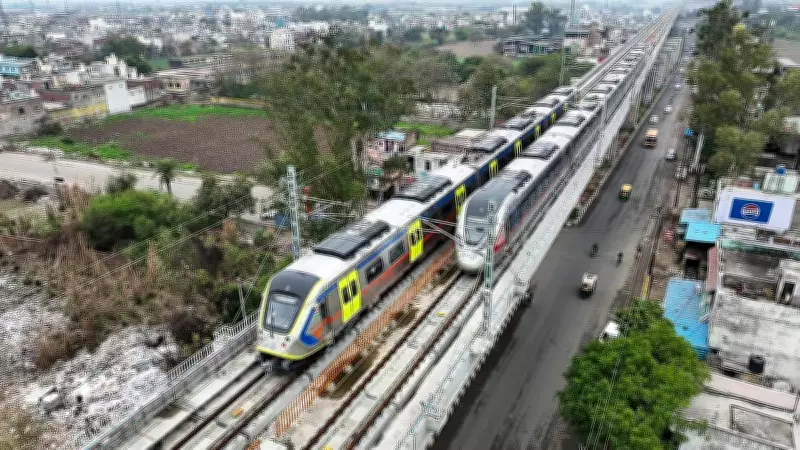
Meerut Metro Set to Become India's Fastest Urban Rail System
In a significant development for urban transportation, the Meerut Metro is poised to become the fastest metro system in India, achieving operational speeds of up to 120 kilometers per hour. This announcement was made by officials on Monday, highlighting a major leap forward in the country's public transit infrastructure.
Key Details of the Meerut Metro Project
The service will operate along a 21-kilometer corridor, connecting Meerut South to Modipuram. This route will feature a total of 12 strategically located stations, designed to serve key residential, commercial, and industrial areas within the city. The entire journey from one end to the other is expected to take approximately 30 minutes, including necessary stoppages at all stations along the way.
This impressive speed and efficiency are set to drastically reduce travel times for commuters, offering a swift and reliable alternative to road-based transport. The project underscores Uttar Pradesh's commitment to enhancing urban mobility and supporting economic growth through advanced infrastructure.

Implications for Public Transport and Regional Development
The introduction of the Meerut Metro at such high speeds is not just a technical achievement but also a strategic move to alleviate traffic congestion and promote sustainable urban living. By enabling faster commutes, it aims to boost productivity and improve the quality of life for residents in the region.
Officials emphasized that this initiative aligns with broader national goals of modernizing public transport systems and reducing carbon emissions. The metro's design incorporates state-of-the-art technology to ensure safety and reliability at high speeds, setting a new benchmark for other cities across India.
As construction progresses, anticipation is building among locals and stakeholders, who view this project as a catalyst for further development in Meerut and surrounding areas. The metro is expected to become operational in the near future, marking a transformative chapter in India's urban transit landscape.