

In a revealing podcast conversation, Tesla and SpaceX CEO Elon Musk shared critical insights from his brief stint leading a US government cost-cutting initiative, highlighting a surprisingly simple reform that could save American taxpayers up to $200 billion every year.
Musk's Government 'Side Quest' and the $200 Billion Fix
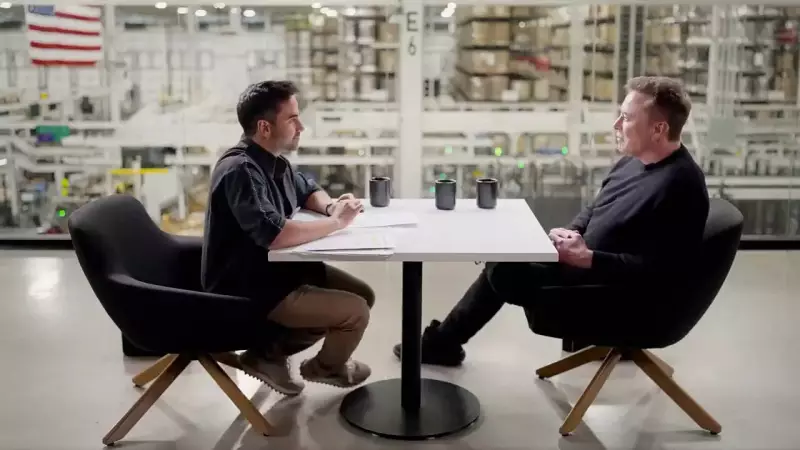
The discussion took place during an interview with Zerodha co-founder Nikhil Kamath, who asked Musk about his key learnings from heading the Department of Government Efficiency (DOGE). This body was established for cost-cutting during the initial months of President Donald Trump's second term. Musk described the experience as an "interesting side quest" that exposed significant payment inefficiencies within the federal system.
He pinpointed one major flaw: a vast number of government payments were being processed without a mandatory Congressional payment code and without substantive information in the comment field. This lack of basic documentation, according to Musk, makes auditing these transactions virtually impossible, opening the door to widespread waste and fraud.

Musk asserted that enforcing a simple rule—requiring a national payment code and a meaningful comment for every federal disbursement—could save the US government an astounding $100 billion to $200 billion annually. He emphasized that this "trivial seeming change" would bring much-needed transparency and accountability to the process.
The Fight Against Fraudulent 'Sympathy' Arguments
Musk detailed the resistance faced when trying to halt questionable payments. He explained that entities benefiting from wasteful or fraudulent funding rarely admit fault. Instead, they often employ highly sympathetic narratives to defend their allocations.
"When efforts are made to stop fraudulent and wasteful payments, the entities responsible do not concede," Musk stated. He recalled being presented with justifications that funds were critical for "needy people" or "children in Africa." However, upon demanding verification, these claims frequently collapsed.
"We're not going to send the money unless we can talk to the recipients and confirm they will actually get it," Musk stressed, outlining his department's rigorous approach.
The 'Save the Baby Pandas' Scam
To illustrate how fraudsters operate, Musk used a vivid analogy. He said corrupt actors never openly ask for money for fraud. They craft emotionally compelling appeals.
"Fraudsters necessarily will come up with a very sympathetic argument. They're not going to say, 'Give us the money for fraud’. It's going to be like the 'Save the Baby Pandas' NGO, which is like, who doesn't want to save the baby pandas? They're adorable," Musk said, prompting laughter. He then revealed the hollow reality behind such pleas: "But then it turns out no pandas are being saved in this thing. It's just corruption, essentially."
He described the simple verification test: "And you're like, 'Well, can you send us a picture of the panda?' They're like, 'No.' 'Okay. Well, how do we know it's going to the pandas then?'" This example underscored his point about the necessity of basic accountability checks, which his proposed payment code system would enforce.
Musk's insights from his short tenure at DOGE reveal that monumental savings for governments might not always require complex overhauls but could hinge on implementing fundamental, transparent practices for financial transactions. His conversation with Kamath sheds light on the persistent challenges of bureaucratic inefficiency and the potent tools available to combat it.






