

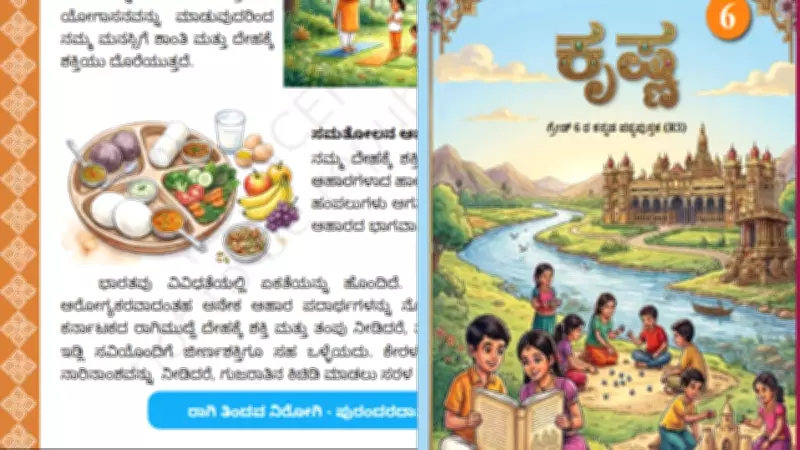
The National Council of Educational Research and Training (NCERT) has clarified that a Kannada textbook, which sparked a row, named its chapters after India's rivers and did not justify vegetarianism or oppose non-vegetarian food. The clarification came on June 25, 2026, amid criticism over the textbook's content.
Textbook Chapters Named After Rivers
NCERT stated that the textbook titled 'Kannada' for Class 9 features chapters named after major Indian rivers such as Ganga, Yamuna, and Godavari. The council emphasized that the naming was purely thematic and aimed at promoting cultural and geographical awareness among students.
According to NCERT officials, the textbook does not contain any content that explains or justifies vegetarianism, nor does it oppose non-vegetarian food. The controversy arose after some sections misinterpreted the chapter titles as promoting a specific dietary preference.

Row Over Alleged Dietary Bias
The row erupted earlier this week when some groups alleged that the textbook promoted vegetarianism by associating river names with dietary choices. However, NCERT clarified that the chapters focus on the cultural and ecological significance of rivers, not on food habits.
"Nowhere in the textbook is vegetarianism explained or justified, nor is non-vegetarian food opposed," an NCERT spokesperson said, according to reports. The council urged critics to review the actual content before drawing conclusions.
Broader Context of Textbook Controversies
This is not the first time NCERT textbooks have faced scrutiny. In recent years, several textbooks have been revised, leading to debates over content related to history, science, and social studies. The council maintains that all textbooks are developed by subject experts and follow a rigorous review process.
The Kannada textbook row highlights the sensitivity around educational materials in India, where cultural and dietary practices vary widely. NCERT has called for constructive dialogue to avoid misinformation.






