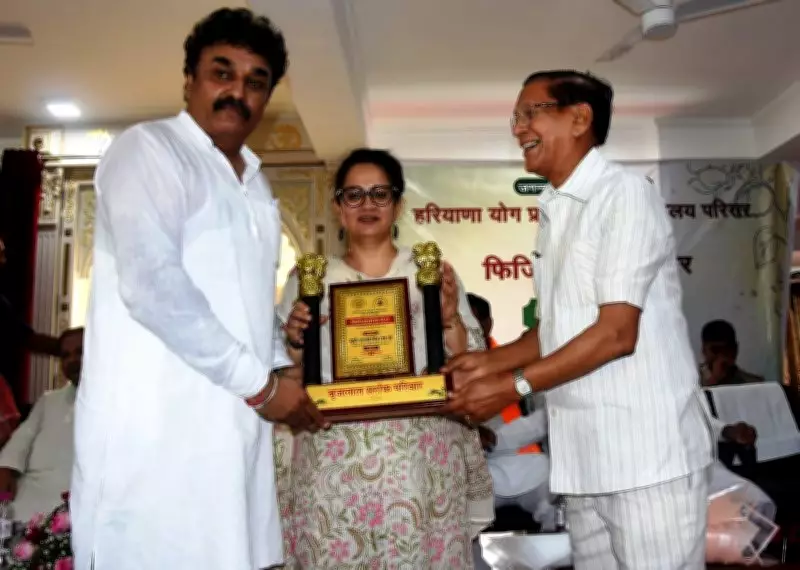
Haryana Health Minister Arti Rao has clarified that the Chaudhary Bansi Lal Civil Hospital and the newly established Bhiwani Medical College will continue to operate independently, with no plans for a merger. She made this announcement during her visit to Bhiwani on Saturday to inaugurate the newly constructed Physiotherapy Centre at the Jagannath Sarraf Wellness Centre and Haryana Yog Naturopathy Hospital campus.
PM Modi to Dedicate New Medical Colleges
Rao informed that Prime Minister Narendra Modi will dedicate the new medical colleges at Bhiwani and Koriawas in Mahendragarh district from Jind on July 17. She emphasized that these institutions would be a milestone in strengthening healthcare services in the state.
Addressing Doctor Shortage and Medicine Supply
Responding to queries about the shortage of doctors at the medical college, Rao stated that the state government had recruited 1,100 medical officers across Haryana in the past one-and-a-half years, leading to significant improvements in healthcare services. She also noted that medicine supply in government hospitals had improved through the Haryana Medical Services Corporation Limited.

Infrastructure Development in Bhiwani
The minister highlighted that works worth Rs 56.8 crore were carried out in the healthcare sector in Bhiwani district during her tenure. This includes the establishment of three blocks of public health units, renovation of two hospitals, and construction of 26 sub health centres and four primary health centres.
Benefits of Physiotherapy Centre
Rao said the newly constructed physiotherapy centre at the Haryana Yoga and Naturopathy Hospital campus would benefit local residents. She also praised Prime Minister Modi for his role in promoting yoga globally.
Future Healthcare Expansion
Rao assured that healthcare infrastructure in the state is being continuously expanded, and Haryana will have access to even better medical facilities in the coming years. She reiterated the government's commitment to ensuring that Primary Health Centres (PHCs) in rural areas provide medical facilities comparable to general hospitals, so that rural residents, especially women, can access healthcare without difficulty.