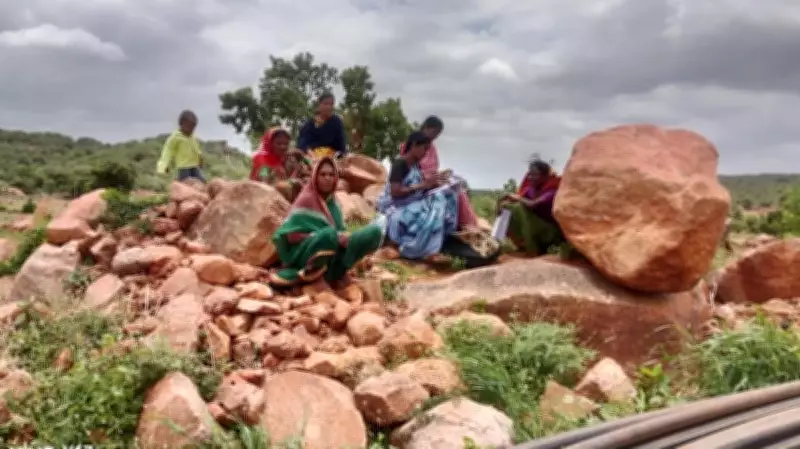
Anganwadi workers in Karnataka's Raichur district are being compelled to climb hillocks every day to access mobile network signals, as their work areas lack basic connectivity. The workers, who are responsible for reporting crucial data on child nutrition and health, find themselves stranded without any support from authorities.
Daily Struggle for Connectivity
The workers have to trek to elevated spots to send daily reports on immunisation, growth monitoring, and supplementary nutrition. This routine not only consumes hours of their time but also poses physical risks, especially during monsoon seasons. According to a local Anganwadi worker, "We have no choice but to climb the hillocks to send our reports. The department doesn't provide any alternative."
Raichur district, located in the Hyderabad-Karnataka region, has several remote villages where telecom infrastructure is poor or nonexistent. Despite repeated pleas, the Department of Women and Child Development has not addressed the issue.

No Redressal in Sight
The workers say they do not know whom to turn to for redressal of their grievances. "We have raised the issue multiple times with our supervisors, but nothing has been done," another worker added. The lack of network affects not only reporting but also emergency communication.
Data from the Department of Telecommunications shows that Raichur has one of the lowest mobile tower densities in the state, with only 0.8 towers per square kilometre against the state average of 2.1. This digital divide exacerbates the challenges faced by frontline workers.
Impact on Service Delivery
The connectivity crisis directly impacts the delivery of government schemes. Anganwadi centres under the Integrated Child Development Services (ICDS) are required to upload real-time data on the Poshan Tracker app. Without network, workers often miss deadlines, leading to delays in fund releases and food supplies.
A senior official from the Women and Child Development Department, speaking on condition of anonymity, acknowledged the problem but said solutions like satellite phones are too expensive. "We are aware of the issue, but infrastructure upgrades take time," the official said.
The workers have now appealed to the district administration and the state government to provide alternative connectivity solutions, such as Wi-Fi hotspots or signal boosters, to ensure they can perform their duties without risking their safety.