

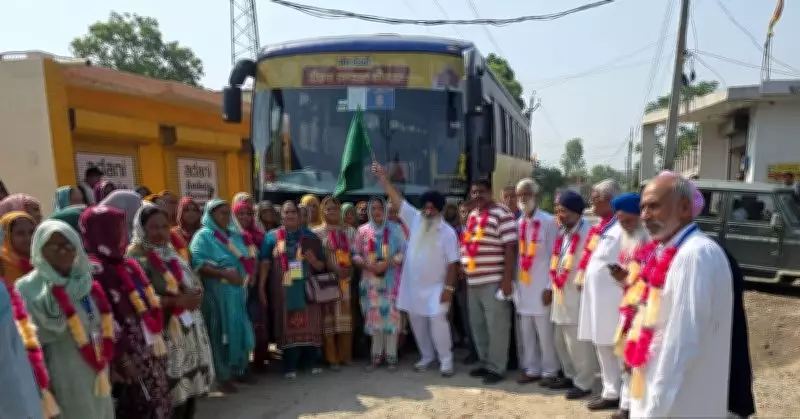
Pilgrimage scheme emerges as key AAP outreach in rural Punjab
With the Punjab Assembly elections just months away, the Bhagwant Mann-led government's Mukhyamantri Tirath Yatra scheme is quietly emerging as one of the ruling Aam Aadmi Party's most effective outreach programmes in rural Punjab. The initiative cuts across political affiliations and generates considerable goodwill among senior citizens.
Hundreds of residents from Ropar board air-conditioned buses every day, guided by AAP volunteers, to undertake pilgrimages to Amritsar and other religious destinations. Launched as a flagship welfare initiative, the scheme provides free pilgrimage facilities to Punjab residents aged 50 years and above. The programme was initially rolled out ahead of the last Lok Sabha elections but has witnessed renewed momentum in recent months, coinciding with preparations for the Assembly polls scheduled early next year.
Free pilgrimage to major religious sites
Under the scheme, thousands of pilgrims are transported in air-conditioned buses to prominent Sikh, Hindu and other religious destinations. The itinerary includes Sri Harmandir Sahib (Golden Temple), Takht Sri Keshgarh Sahib at Anandpur Sahib, Durgiana Temple in Amritsar, Mata Naina Devi Temple in Himachal Pradesh and Khatu Shyam Temple in Rajasthan.

The government bears the entire cost of transportation, accommodation, meals, local travel and medical assistance. Pilgrims are also provided travel kits and support staff throughout the journey. Government figures indicate that more than 1.10 lakh senior citizens have already benefited from the scheme since its launch.
Beneficiaries praise scheme's impact
The programme is winning appreciation among many elderly residents. Baldev Singh, a resident of a village near Ropar, said: “The government has done a commendable job. Visiting the Golden Temple had been my wish. Everything was provided free of cost and we were treated with dignity throughout the journey.”
Kamla Devi, another beneficiary from the district, added: “We travelled comfortably in air-conditioned buses. Food, lodging and other arrangements were excellent. The government deserves appreciation for thinking about common people and senior citizens.”
Political observers note emotional value
Political observers say that unlike infrastructure projects, which may take years to show visible results, religious tourism appears to deliver immediate and tangible benefits. “The scheme has emotional value. It allows elderly people to fulfil religious aspirations that many had postponed for decades due to various constraints,” said a political observer in Ropar.
The popularity of the programme has encouraged demands for additional destinations. Residents in several villages have reportedly sought pilgrimages to Vrindavan and other important religious centres. Sources in the government indicated that proposals for expanding the list of destinations are under consideration.
Opposition criticism and AAP response
Opposition parties view the programme through a political lens, arguing that the renewed emphasis on the yatra ahead of elections is aimed at consolidating support among rural voters and senior citizens. AAP leaders reject such allegations, maintaining that the programme is designed to fulfil the spiritual aspirations of ordinary citizens and reflects the government's commitment to inclusive welfare.
As Punjab moves towards another crucial electoral battle, the Mukhyamantri Tirath Yatra has become much more than a pilgrimage programme. It has evolved into a political instrument that blends welfare, faith and public outreach. Whether the goodwill generated by thousands of satisfied pilgrims translates into votes remains to be seen.






