

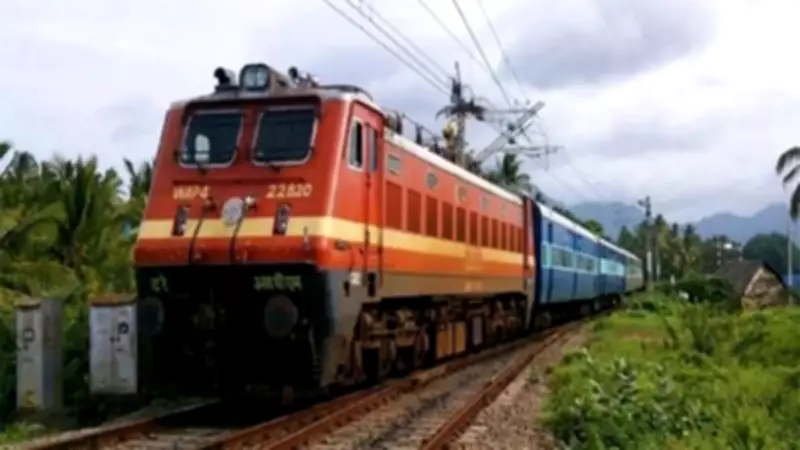
Indian Railways Achieves Milestone with Record Kavach 4.0 Deployment
In a landmark achievement for rail safety, Indian Railways on Friday commissioned 472.3 route kilometres of its indigenous Kavach Version 4.0 Automatic Train Protection system across three crucial sections. This deployment represents the highest-ever single-day and monthly commissioning of the safety system, surpassing the previous record of 324 route kilometres.
Strategic Expansion Across Key Corridors
The newly operational stretches include:
- Vadodara–Virar section (344 km) on Western Railway
- Tuglakabad Junction Cabin–Palwal (35 km) on Northern Railway
- Manpur–Sarmatanr (93.3 km) on East Central Railway
With this significant addition, Kavach Version 4.0 now covers 1,306.3 route kilometres across five railway zones. The system had previously been commissioned on 834 route kilometres, including critical sections of major routes such as Delhi–Mumbai and Delhi–Howrah corridors.

Enhanced Safety on Busiest Rail Networks
On the Northern Railway, the 35-km Tuglakabad Junction Cabin–Palwal section forms part of the vital four-line Delhi–Mumbai corridor. According to official PIB releases, the system has been installed across station yards, two main lines with automatic signalling, and two lines with absolute block signalling. Railway officials emphasized that this upgrade significantly enhances safety on one of India's busiest rail corridors, which handles substantial suburban, passenger, and freight traffic daily.
The East Central Railway witnessed the commencement of Kavach 4.0 operations on the 93.3-km Manpur–Sarmatanr section. The Sasaram Intercity Express became the first Kavach-enabled service to operate successfully on this route, during which a critical head-on collision test was conducted. The train automatically stopped during the test, validating the system's effectiveness in preventing potential accidents. Kavach installation is currently progressing over 4,235 route kilometres on East Central Railway, including essential sections of the Delhi–Howrah trunk route.
Western Railway's Major Infrastructure Achievement
On the Western Railway, Kavach 4.0 was commissioned on the extensive 344-km Vadodara–Virar section of the Delhi–Mumbai route. This milestone was celebrated with the operation of the Dadar–Bhuj Sayajinagri Express, which became the first Kavach-equipped train to run from Mumbai. Ongoing work includes:
- The Vadodara–Nagda section, expected for completion by March 2026
- The Virar–Mumbai Central section, targeted for commissioning by September 2026
To date, 364 locomotives on Western Railway have been equipped with Kavach technology, with additional sections sanctioned for future deployment.
Advanced Indigenous Technology for Modern Railways
Kavach Version 4.0 represents the latest iteration of India's indigenously developed train protection system, officially approved by the Research Designs and Standards Organisation (RDSO). Specifically designed for India's high-density and multi-line rail network, the system integrates:
- GPS technology
- Radio communication systems
- Onboard microprocessors
This sophisticated integration enables the system to prevent collisions and overspeeding by automatically applying brakes when a train enters an unsafe zone. Remarkably, Kavach continues to function effectively even under low visibility conditions and adverse weather scenarios.
Global Safety Standards and Future Vision
Certified to SIL-4 safety standards—the highest level of safety integrity globally—Kavach 4.0 is positioned for large-scale deployment across Indian Railways. Officials have highlighted that the continued expansion of Kavach coverage demonstrates the railways' commitment to improving operational safety and reliability while simultaneously reducing dependence on imported technologies.
The systematic rollout of this indigenous safety system marks a transformative phase in Indian Railways' journey toward creating a safer, more efficient, and technologically advanced rail network for millions of passengers and freight operations across the country.






