6.94 Lakh MT of Rice Undelivered as Deadline Expires
Rice millers across Haryana have failed to meet the deadline for supplying custom-milled rice (CMR) to the Food Corporation of India (FCI), leaving approximately 6.94 lakh metric tonnes (MT) undelivered. This delay raises concerns for the food security system and government schemes reliant on timely rice supplies.
What Is the CMR Policy?
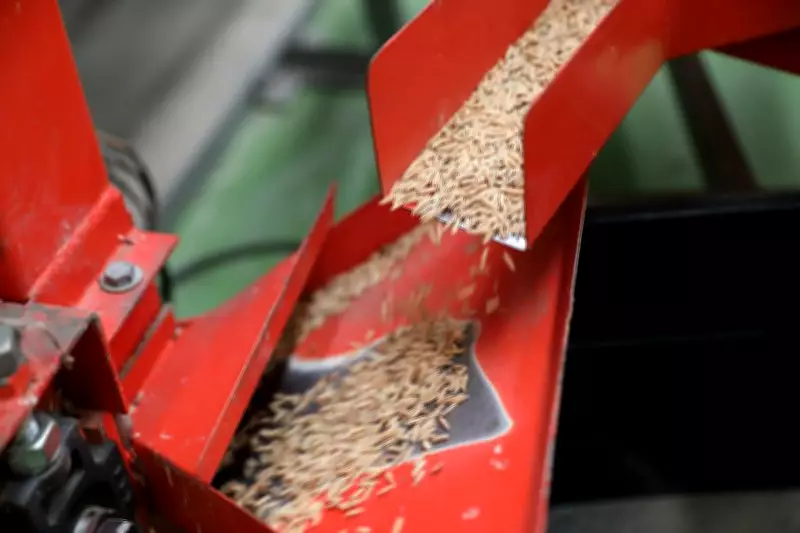
Under the CMR policy, rice millers process paddy allocated by government agencies and must deliver 67% rice, including 1% Fortified Rice Kernels (FRK). Milling charges are fixed at Rs 10 per quintal for raw rice, paid only after satisfactory delivery to FCI. By-products like broken rice, husk, and bran remain with millers. The process includes drying, de-husking, filling, stitching, inspection, weighing, sampling, transportation, and delivery to FCI godowns. Initially, blending 1% FRK was mandatory, but due to shortages and logistical issues, this requirement was discontinued in February.
Current Status of CMR Delivery in Haryana
For the 2025-26 procurement season, about 1,400 rice mills in Haryana were allocated 62.12 lakh MT of paddy, requiring delivery of 41.62 lakh MT of CMR. So far, millers have supplied 34.68 lakh MT, leaving 6.94 lakh MT pending after the final deadline.

Delivery Schedule and District-Wise Backlog
Under the 2025-26 CMR policy, millers were to deliver 15% by end-December, 25% by late January, 20% by end-February, 15% by late March, 15% by end-May, and 10% by end-June. Despite this, large quantities remain undelivered. District-wise, Karnal has the largest backlog at 2.54 lakh MT, followed by Fatehabad (1.5 lakh MT), Yamunanagar (62,179 MT), Kaithal (58,836 MT), Kurukshetra (46,418 MT), Sirsa (36,466 MT), Jind (16,912 MT), Ambala (16,873 MT), Hisar (14,840 MT), Panipat (12,782 MT), Rohtak (7,628 MT), Palwal (7,043 MT), Faridabad (2,720 MT), Sonepat (2,488 MT), Panchkula (1,782 MT), and Jhajjar (1,583 MT).
Reasons for Delay: Space Shortage, Fortification, and Labour Issues
Rice millers have requested a three-month extension, citing operational challenges. A major issue is alleged space shortage at FCI godowns, especially in Karnal, where multiple districts are linked to the same facilities, preventing timely deposits. Delays also stem from the rice fortification programme, which mandated FRK use but faced supplier shortages. Although the Union government suspended the programme on February 27, millers argue valuable time was lost. Additionally, a labour shortage during the wheat procurement season in April forced many mills to slow or halt operations.
Government Response and Verification Drive
The Department of Food, Civil Supplies and Consumer Affairs has conducted physical verifications of nearly all rice mills to assess paddy quantity, milled rice stock, and pending CMR deliveries. With verification almost complete, the government will decide whether to extend the deadline or take administrative action against defaulting millers.
Importance of Timely CMR Delivery
An official stressed that timely CMR delivery is crucial for maintaining FCI stocks for the Public Distribution System, Mid-Day Meal Scheme, and other welfare programmes. Delays could disrupt storage planning and cause further logistical issues.