

Union Minister Nitin Gadkari Sounds Alarm on India's Fossil Fuel Dependency
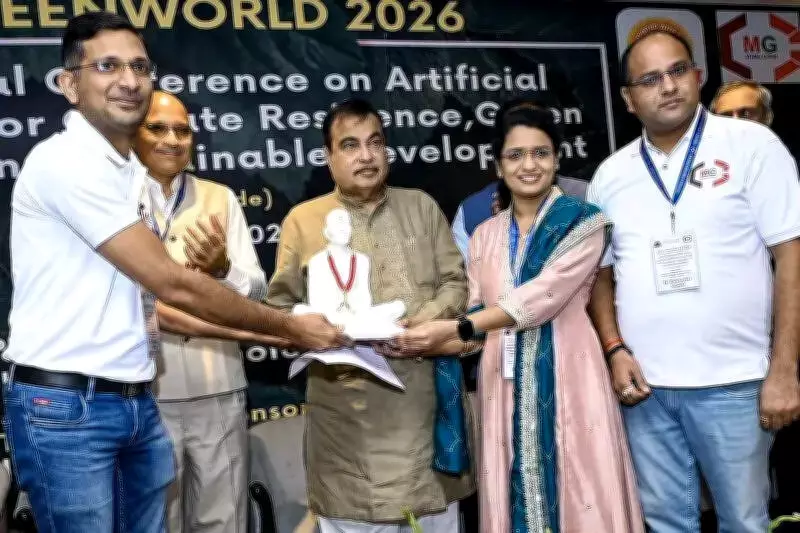
Nagpur: In a stark warning delivered on Friday, Union Minister Nitin Gadkari declared that India is confronting simultaneous economic and environmental crises due to its overwhelming reliance on imported fossil fuels. Addressing an international conference focused on climate resilience, green innovation, and sustainable development in Nagpur, Gadkari emphasized the critical and immediate necessity to transition towards alternative and indigenous energy sources.
Massive Economic Drain and Environmental Toll
The minister revealed a staggering figure: India spends nearly Rs 22 lakh crore every year on importing fossil fuels. This colossal expenditure places a severe burden on the national economy while simultaneously exacerbating pollution levels across the country. "Without reducing fossil fuel imports, we cannot achieve the vision of an Atmanirbhar Bharat," Gadkari asserted, linking energy independence directly to national self-reliance.
While acknowledging India's status as the world's fastest-growing economy, Gadkari stressed that future growth must be firmly anchored in the principles of "ethics, economy, ecology, and environment." He underlined that genuine sustainable development is impossible without the diligent protection of natural resources and the implementation of solutions tailored to specific regional needs.

Bridging the Gap Between Academia and Real-World Application
Expressing deep concern, Gadkari highlighted a significant disconnect between academic institutions and practical problem-solving. He pointed to the limited involvement of universities and engineering colleges in addressing ground-level challenges. "There is no coordination between universities, research organisations and people at the district level. That is the biggest challenge," he stated, urging these institutions to play a more direct and impactful role in socioeconomic development.
The minister went a step further by advocating for performance audits of educational institutions to evaluate their tangible contributions to society. He posed a critical question: "If technology, knowledge and research are not improving the lives of common people, then what is the use of such investment?"
Promising Solutions: Biofuels and AI in Agriculture
Gadkari identified biofuels—including ethanol, methanol, biodiesel, and bio-CNG—as cost-effective, pollution-free, and locally available alternatives. He provided a compelling example: converting agricultural waste like rice straw into bio-CNG. This process can address the severe pollution caused by stubble burning while simultaneously creating new economic value from what was previously considered waste.
Turning to technology, the minister spotlighted the immense potential of Artificial Intelligence (AI) in revolutionizing agriculture, particularly in the Vidarbha region. He cited instances where AI-based, data-driven farming practices could multiply crop yields significantly. In a concrete development, Gadkari disclosed that efforts are actively underway to onboard approximately 1,000 orange growers in the region to adopt AI technologies, with around 500 farmers already in the process.
Call for Innovation and Industry-Academia Synergy
Gadkari also pointed to major investments, such as a ₹10,000 crore project by the Mahindra Group in Butibori, as significant opportunities for job creation. He urged academic institutions to realign their curricula with industry requirements to produce a skilled workforce ready to meet these new demands.
Furthermore, the minister discussed ongoing experimental work to convert carbon dioxide into usable fuels like methanol and ethanol, describing this innovation as a "need of the hour" to simultaneously combat climate change and address energy security challenges.
In his concluding remarks, Gadkari issued a clarion call to research institutions, IITs, and engineering colleges. He urged them to concentrate on practical innovations that tackle India's energy needs using locally available raw materials. "The future lies in converting knowledge into wealth through innovation, research and entrepreneurship," Gadkari concluded, charting a path forward for a sustainable and self-reliant India.






