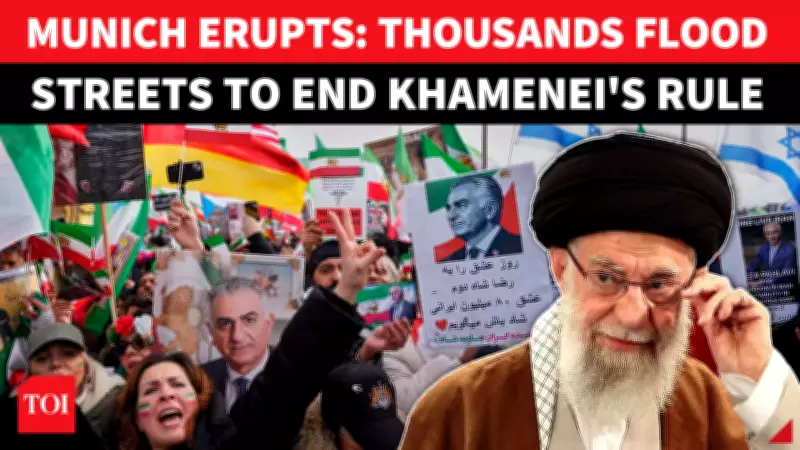
Massive Anti-Iran Demonstration Shakes Munich During Global Security Summit
In a powerful display of dissent, nearly 200,000 protesters flooded the streets of Munich, Germany, creating a significant political spectacle as world leaders convened nearby for the prestigious Munich Security Conference. The massive rally, organized by opponents of Iran's Islamic Republic, transformed the Theresienwiese fairgrounds into a sea of historic lion-and-sun flags and passionate chants demanding justice and regime change.
Protesters Amplify Calls for International Action Against Tehran
The demonstration was strategically timed to coincide with the high-level security summit, which brought together global policymakers and diplomats just kilometers away. Protesters explicitly called for increased international pressure on Tehran, highlighting Iran's recent deadly crackdown on internal dissent and human rights violations. Organizers emphasized that the gathering aimed to force the Iranian issue onto the formal agenda of the concurrent security discussions.
The scale of the protest was unprecedented for such events in Munich, with participants traveling from across Europe and beyond to join the rally. Many held banners and signs in multiple languages, appealing directly to the conference attendees to take concrete diplomatic and economic actions against the Iranian government. The visual symbolism of the historic pre-revolutionary Iranian flags served as a potent rejection of the current Islamic Republic's symbols and authority.

Global Solidarity and Regime Change Demands Echo Through Munich
Crowds repeatedly chanted slogans calling for the overthrow of Supreme Leader Ali Khamenei and the entire governing structure in Tehran. Speakers at the event, which included Iranian diaspora leaders and human rights activists, detailed specific incidents of violence and oppression within Iran, urging the international community to move beyond statements of concern to implement tangible sanctions and support mechanisms for Iranian civil society.
The geographical proximity between the protest and the security conference created a palpable tension in the city, with the sounds of demonstration occasionally audible near the conference venues. Security was noticeably heightened throughout Munich, with additional police presence managing the dual large-scale events. The protest remained peaceful throughout, according to local authorities, though emotionally charged.
This demonstration represents one of the largest coordinated anti-Iran government actions outside the country in recent years, significantly amplifying the visibility of opposition movements at a moment when global attention was focused on security matters. The timing ensured that media coverage of the Munich Security Conference consistently referenced the parallel protest, keeping Iran's domestic political situation in the international spotlight throughout the summit proceedings.