

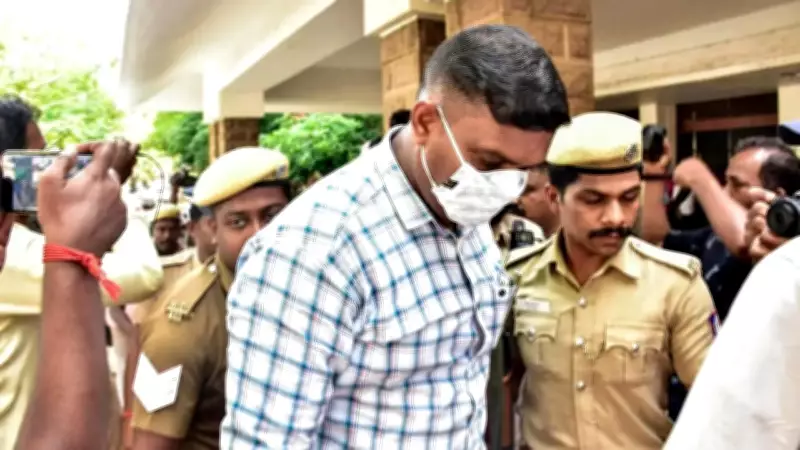
Madurai Court Delivers Landmark Verdict in Custodial Death Case
A Madurai court has delivered a historic verdict, sentencing nine police officers to death for the brutal custodial killing of a father and son in June 2020. The case, which originated from a minor lockdown violation during the Covid-19 pandemic, has been described as one of the most shocking instances of police brutality in recent Indian history.
The Tragic Events of June 2020
The incident traces back to the evening of June 19, 2020, during the strict Covid-19 lockdown period. P Jeyaraj and his son J Beniks, who operated a small mobile accessories shop in Sathankulam town of Thoothukudi district, kept their establishment open beyond permitted hours.
What began as routine enforcement of lockdown regulations quickly escalated into a deadly confrontation. Police personnel picked up the father-son duo following an altercation over the violation and took them to the Sathankulam police station.

Inside the police station, as the court would later establish through extensive evidence, Jeyaraj and Beniks were subjected to relentless and brutal assault throughout the night. Multiple police personnel participated in the beating, which investigators described as sustained violence rather than momentary aggression.
Systematic Brutality and Fatal Consequences
The assault continued for hours, leaving both men with critical injuries. Despite their deteriorating physical condition, they were produced before a magistrate on June 20 and remanded to judicial custody. They were subsequently lodged in Kovilpatti sub-jail, already bearing severe injuries from the police station ordeal.
Their condition worsened rapidly in custody. Beniks succumbed to his injuries on June 22 at a government hospital in Kovilpatti. His father, Jeyaraj, died a day later on June 23, completing a tragic sequence of events that began with a minor lockdown violation.
Nationwide Outrage and Judicial Intervention
The deaths triggered massive outrage across Tamil Nadu and throughout India, drawing comparisons with global cases of police brutality that emerged during the same period. The public outcry prompted judicial intervention at the highest levels.
The Madras High Court took suo motu cognisance of the case and transferred the investigation to the Central Bureau of Investigation, expressing concern that the truth might otherwise have been buried. This intervention proved crucial in ensuring a thorough and impartial investigation.
Court's Stern Verdict and Symbolic Gesture
Delivering the verdict on Monday, First Additional District and Sessions Judge G Muthukumaran declared that the crime warranted the harshest punishment available under the law. The judge emphasized that a lesser sentence would embolden errant officers and send a dangerous signal to society.
Describing custodial deaths as a "social evil," the court stated that the policemen had grossly misused their authority and acted with deliberate intent to instil fear in the community. "Where there is power, there must be responsibility," the judge noted, characterizing the case as one where "those meant to protect became perpetrators."
In a powerful symbolic gesture after signing the judgment, Judge Muthukumaran broke the nib of his pen, a traditional judicial practice indicating that the decision should never be altered or reconsidered.
The Convicts and Financial Penalties
The nine convicted policemen include:
- One inspector
- Two sub-inspectors
- Two head constables
- Four constables
The court found all nine equally responsible for the fatal assault that led to the deaths. In addition to the death sentences, the court imposed collective fines exceeding Rs 1 crore on the convicts.
Family's Response and Broader Implications
For the bereaved family, the verdict brought a measure of closure after nearly six years of legal proceedings. "This is not just justice for us, but for all common people," said J Persis, daughter of Jeyaraj. "No one else should go through what we did."

The court underscored that the Sathankulam incident was not an isolated case, referencing similar instances of custodial violence across the country. The judgment stressed that stringent punishment was absolutely necessary to deter future abuses of police power.
This landmark verdict sends a clear message about accountability in law enforcement, forged from the horrors of that June night when a minor lockdown violation ended in irreversible loss of two innocent lives. The case serves as a stark reminder of the critical importance of police reform and the protection of citizens' rights in a democratic society.





