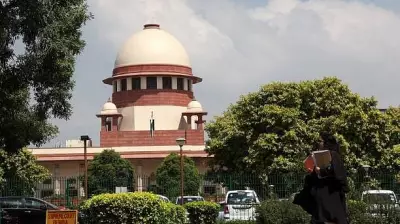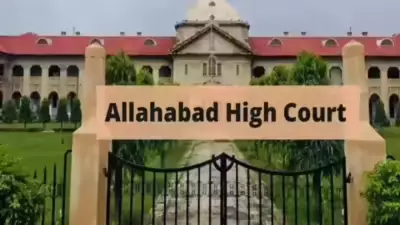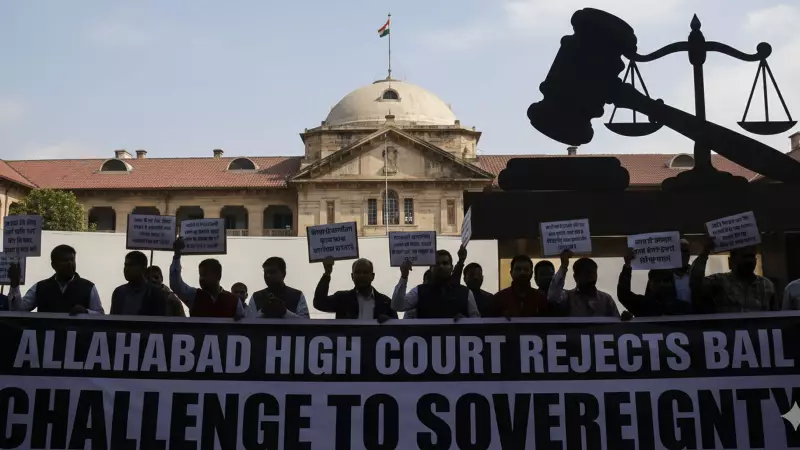
In a significant ruling, the Allahabad High Court has strongly condemned the controversial slogan 'gustakh-e-nabi ki ek saja, sar tan se juda' (the only punishment for one who disrespects the Prophet is beheading), declaring it a direct challenge to India's sovereignty, integrity, and its legal framework. The court made these sharp observations while rejecting the bail plea of an accused individual arrested in connection with a violent protest in Bareilly.
Court's Stern Observations on the Slogan
Justice Arun Kumar Singh Deshwal, presiding over the case, delivered a firm verdict on December 19, 2025. The court stated that any slogan chanted by a crowd which prescribes a death sentence, contrary to the punishments laid down by the Bharatiya Nyaya Sanhita (BNS) or other criminal laws, is fundamentally against the constitutional ethos. It represents a severe challenge to the authority of the Indian legal system, which is rooted in democratic principles.
The bench explicitly noted that the slogan 'sar tan se juda' has no basis in the Quran or any other authentic Islamic religious text. Despite this, the court observed, the slogan is widely used by some individuals without understanding its grave implications and correct meaning.
Details of the Case and Violent Protest
The case stems from an incident in Bareilly on May 26, 2025. According to the state's submission, the president of an organization named Ittefaq Minnat Council, Maulana Taukir Raza, and a member, Nadeem Khan, allegedly incited the Muslim community to assemble at Islamia Inter College to protest against the authorities.
Despite prohibitory orders under Section 163 of the BNSS (Bharatiya Nagarik Suraksha Sanhita) being in force, a crowd of approximately 500 people gathered after namaz. The police alleged that this unlawful assembly raised anti-government and provocative slogans, including 'sar tan se juda'. The protest allegedly turned violent, with participants attacking police personnel, damaging public and private property, and using stones, petrol bombs, and even firing, resulting in injuries.
Initially, seven persons were arrested. Based on witness statements and CCTV footage, the First Information Report (FIR) was eventually filed against 25 named accused and around 1,700 unknown persons. The petitioner in this bail plea was booked under serious sections of the BNS, including attempt to murder, voluntarily causing hurt by dangerous means, and provisions of the Prevention of Damage to Public Property Act.
Arguments and the Court's Final Decision
The petitioner's advocate, Akhilesh Kumar Dwivedi, argued that his client was falsely implicated and had no criminal history. He contended that the arrest was made from the petitioner's home, not the protest site, and there was no incriminating evidence against him.
However, the state, represented by Additional Advocate General Anoop Trivedi, opposed the bail vehemently. He argued that the acts of the accused were not merely about promoting enmity between religious communities but were also an act against the State and India's unity and integrity.
After examining the case diary, Justice Deshwal found sufficient material indicating the petitioner was part of the unlawful assembly. The court noted the assembly did not just raise objectionable slogans that challenged the legal system but also resulted in violence against police and property damage. The judge stated the petitioner was arrested from the spot, and therefore, no grounds for bail were made out.
The court elaborated on the constitutional position, affirming that while Article 19 guarantees the right to assemble and freedom of speech, these rights are subject to reasonable restrictions under Article 19(2). Slogans that illegally prescribe capital punishment fall foul of these restrictions and are punishable under laws like Section 152 of the BNS.
In a nuanced observation, the bench distinguished devotional proclamations from inflammatory slogans. It cited examples like 'nara-e-takbir' followed by 'Allahu Akbar', which are expressions of faith and not objectionable. The court also referenced historical accounts of Prophet Mohammad's kindness and forgiveness, even towards those who disrespected him, suggesting that the violent sentiment behind the disputed slogan contradicts those teachings.
By rejecting the bail, the Allahabad High Court has sent a strong message that slogans threatening violence and extra-judicial punishment will be viewed as a severe threat to national sovereignty and the rule of law.