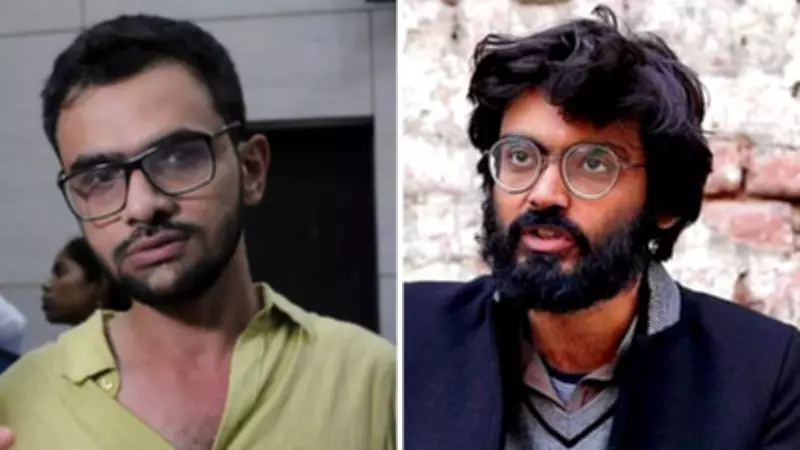
A Delhi court on Saturday rejected the fresh bail applications filed by student activists Umar Khalid and Sharjeel Imam in a larger conspiracy case related to the 2020 Delhi riots. Additional Sessions Judge Sameer Bajpai passed the order, dismissing the pleas that argued prolonged incarceration and delay in trial.
Background of the case
The two activists had approached the court after the Supreme Court declined to grant them bail on January 5 in the case registered under the Unlawful Activities (Prevention) Act (UAPA). Both have been in custody for nearly six years without charges being framed. The case involves allegations of a larger conspiracy behind the communal violence that erupted in northeast Delhi in February 2020, which left over 50 dead and hundreds injured.
Imam's arguments
In his bail plea, Sharjeel Imam contended that more than six months had elapsed without any meaningful progress in the trial since the Supreme Court order. He argued that the proceedings on the framing of charges remained incomplete despite him having spent nearly six years in custody. Imam further claimed that he was not in Delhi after the second week of January 2020 and was already in judicial custody in another case before the violence erupted. He submitted that his continued incarceration without commencement of trial violated his fundamental right to liberty under Article 21 of the Constitution.

Khalid's arguments
Umar Khalid, in his separate bail plea, similarly cited prolonged incarceration and delay in trial. He argued that the trial was unlikely to begin in the near future given the large number of accused persons, witnesses and documents involved in the case. The plea also referred to observations made by the Supreme Court in a May 18 order in another terror-related case, where the court stressed that anti-terror laws should not result in indefinite detention. Khalid argued that these subsequent judicial developments constituted a change in circumstances, making his fresh bail application maintainable despite the earlier rejection.
Court's decision
Additional Sessions Judge Sameer Bajpai, after hearing both sides, rejected the bail applications. The court observed that there was no substantial change in circumstances that warranted granting bail. The judge noted that the trial was progressing and the delay was not intentional. The order came as a setback to the activists, who have been in custody since 2020.
Legal implications
The case is being closely watched as it involves the application of UAPA, a stringent anti-terror law. The Supreme Court has in several cases emphasized that bail should be the rule and jail the exception, but in UAPA cases, the bar for bail is higher. The rejection of bail in this case highlights the challenges faced by accused in terror-related cases where trials often take years to conclude.