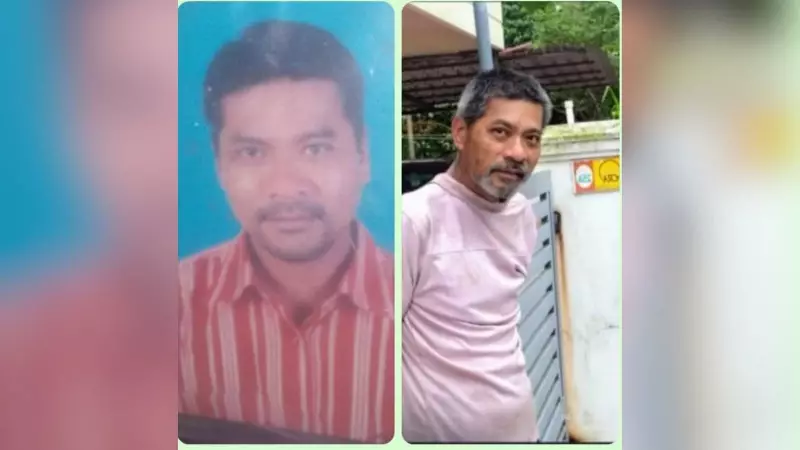
In a tragic conclusion to a two-month-long search, the decomposed body of a 59-year-old man from Bengaluru, who was deported from Kuwait and later went missing from a Kochi hospital, has been discovered. The incident has sparked serious questions about the handling of vulnerable individuals by medical and law enforcement systems.
A Trail of Disappearance and a Grim Discovery
The body was found in a deserted, thicketed area near the Hindustan Machine Tools premises in Kalamassery, barely two kilometres from the Government Medical College Hospital where he was last admitted. Police have prima facie identified the deceased as Suraj Lama, aged 59. His son, Santon Lama, who lives in Bengaluru, has identified the clothes found on the body as those his father was wearing when he vanished.
Aluva Deputy Superintendent of Police R Rajesh stated that while the initial identification points to Suraj Lama, final confirmation is pending scientific examination. The discovery confirms the worst fears of his family, who had been desperately searching for him since October 2025.
Sequence of Events: From Kuwait to Kochi
Suraj Lama had worked in Kuwait's hotel business for decades while his family resided in Bengaluru. The troubles began when the family was informed on August 31 that he had suffered from "alcohol poisoning" and was hospitalized. He subsequently developed partial memory loss and speech impairment, rendering him unable to recall his own name properly.
After his discharge, Kuwaiti authorities took him into custody and transferred him to a deportation centre. On October 7, a friend shared a photograph of an air ticket revealing that Suraj had been deported via Jazeera Airways on October 4 and sent to Kochi International Airport, not to his home city of Bengaluru.
Upon landing on October 5, he walked out of the airport and boarded a bus. After learning of his deportation to Kochi, his family filed a missing person complaint at the Kochi airport police station on October 8. Santon later traced his father's movements through a Kochi Metro feeder bus driver, who recounted having to persuade a disoriented man (later identified as Suraj) to alight at Aluva metro station.
The same day, residents in Thrikkakara spotted him and alerted the police. Officers took him into custody and later admitted him to the Government Medical College Hospital in Kalamassery. CCTV footage from the hospital showed Suraj walking out just 20 minutes after being admitted on October 10, after which his whereabouts remained unknown.
High Court Intervention and Allegations of Systemic Failure
His son, Santon Lama, filed a habeas corpus petition in the Kerala High Court on October 21, seeking his father's production. The court heard the matter eight times over two months and expressed deep concern over the rising number of missing persons in the state.
Justice Devan Ramachandran, in an interim order, had assured Santon, "We can assure him that this court will not rest until we are able to trace the father." The court even dubbed Suraj an "alleged detenue" since he went missing from state custody. In a hearing on November 21, the judge noted a "lurring suspicion that the 'alleged detenue' may be still available very close by; but remaining untraced only because he is unable to express himself."
Following the discovery of the body, Santon Lama squarely blamed "systemic failure" for his father's death. "If the government medical college authorities hadn't let my father leave, he would have been alive now," he told the media. He questioned how the authorities could claim his father asked to leave when he was incapable of coherent speech. Santon has vowed to take the matter back to the High Court.
Broader Implications and Unanswered Questions
This case has highlighted critical gaps in the protocol for handling deportees, especially those with medical conditions. The Kerala High Court's observations point to a recurring issue of citizens vanishing without a trace in the state. The court had remarked that in many such cases, it believes the missing individuals might be alive but "oblivious to his own identity on account of factors beyond his control."
The tragedy of Suraj Lama underscores the need for a more robust and compassionate system to manage vulnerable individuals caught between international deportation and domestic welfare mechanisms. The promised scientific examination of the body and the family's continued legal battle are now the next steps in this sorrowful narrative.