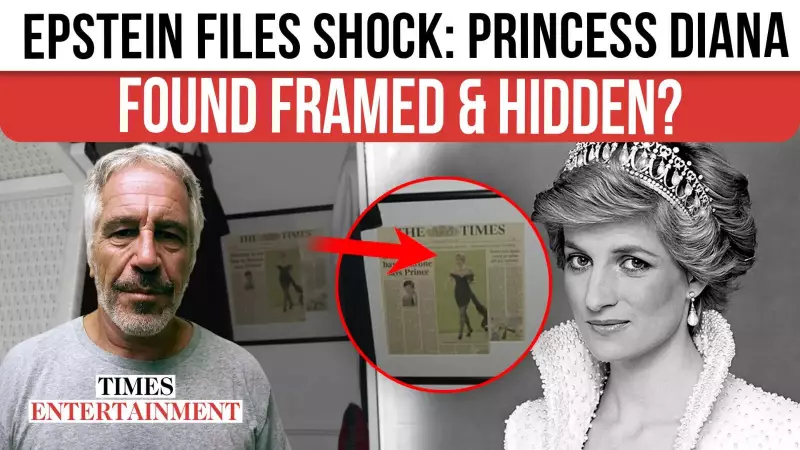
The release of over 300,000 documents related to the Jeffrey Epstein case by the US Department of Justice (DOJ) has taken a bizarre and troubling turn. The massive data dump, intended to bring transparency, has instead ignited a firestorm of controversy and allegations of a cover-up after officials quietly pulled several photographs from the public record.
Disturbing Discovery in Epstein's Wardrobe
Among the most shocking finds in the initial release was an FBI photograph that showed a framed newspaper front page featuring Princess Diana, hidden inside Jeffrey Epstein's wardrobe. The image, devoid of any context or official explanation, has sent shockwaves through the public and media. It is crucial to note that there are no allegations whatsoever involving the late Princess of Wales. However, the mere presence of this item in the disgraced financier's possession has raised a flood of unsettling questions about the nature of his connections and interests.
A Release Marred by Redactions and Removal
The DOJ's handling of the document release has been heavily criticised. After making the files public, the department quietly removed several photos, a move that has sparked immediate backlash. Critics and transparency advocates are calling this a deliberate attempt to hide information from the public. The already heavily redacted nature of the released files, combined with the selective removal of images, has led to widespread claims that the full truth about the Epstein network is still being suppressed.

The core facts are these: On December 22, 2025, the DOJ published a trove of over 300,000 files. Subsequently, certain photographs were taken down. The discovered FBI image of the Princess Diana newspaper page remains one of the most discussed and disturbing elements, precisely because it was offered without any clarifying information.
Mounting Pressure for Full Transparency
The episode has significantly damaged public trust in the investigative process. Survivors of Epstein's crimes and oversight bodies are now demanding answers. The central question being asked is: if this unsettling and seemingly unrelated image was made public only to be withdrawn, what other potentially incendiary material is being kept from view? The lack of context around the Princess Diana photograph exemplifies the problematic nature of the entire release—it provides a provocative detail but no framework for understanding it, fueling speculation and conspiracy theories.
This sequence of events—a large release, followed by the removal of specific visual evidence containing a shocking reference to a global icon—has cemented fears that the complete story of the Epstein network, its reach, and its protectors remains untold. The demand for a complete, unredacted disclosure is growing louder by the day.