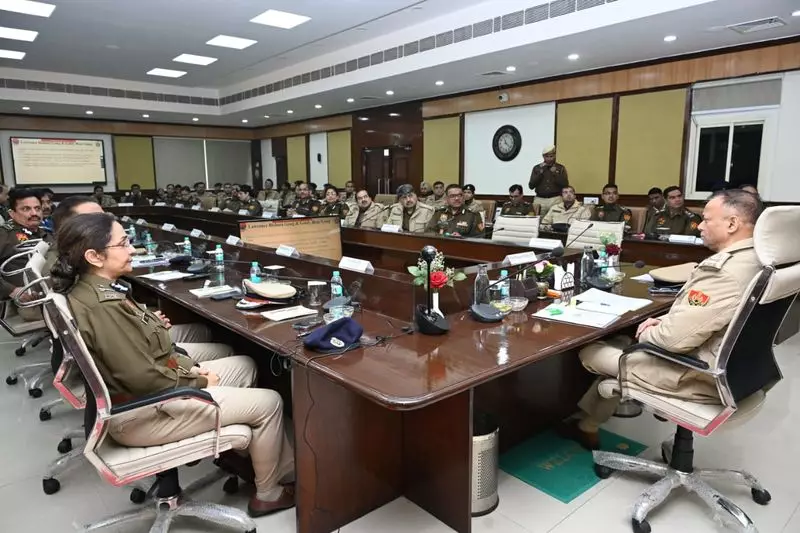
Haryana's Director General of Police (DGP), Shatrujeet Kapur, has made a clear and definitive statement regarding the provision of security cover to individuals in the state. He emphasized that the deployment of police personnel for protection duties is a serious decision based solely on professional threat assessment and is never intended for "show-off" or as a status symbol.
Professional Assessment Over Prestige
The state's top police officer addressed this matter during an interaction with the media in Panchkula. He stressed that the Haryana Police follows a meticulous and objective process when evaluating security needs. The primary and only consideration is the genuine level of threat faced by an individual, as determined by intelligence inputs and risk analysis. The force operates with the principle that its personnel are a valuable resource for maintaining public order and safety, and their deployment must be justified by concrete security requirements.
"Security is not given for show-off," DGP Kapur stated unequivocally. His remarks underscore a shift towards a more professional and need-based system, distancing the practice from any perceptions of it being a privilege conferred based on political or social standing alone. The focus remains squarely on the imperative of protecting lives from verified dangers.

A Dynamic and Reviewed Process
Kapur further explained that security provisions are not static. The threat perception for any protectee is under constant review. The security detail assigned to an individual is dynamically adjusted based on the evolving situation. If the perceived threat decreases, the security cover is accordingly scaled down or withdrawn. Conversely, if new intelligence suggests heightened risk, the protection is enhanced.
This fluid system ensures that police resources are allocated efficiently and responsively. It prevents the permanent attachment of personnel where there is no longer a demonstrated need, allowing those officers to be reassigned to other critical duties within the force. The DGP's comments highlight a data-driven and rational approach to a matter often shrouded in perceptions of entitlement.
Context and Implications
The statement from the police chief comes at a time when the deployment of security personnel to VIPs, politicians, and other individuals is frequently scrutinized by the public and media. There is often debate about whether such covers are proportionate to the actual threat or are merely trappings of power.
By publicly outlining the threat-assessment-based policy, DGP Shatrujeet Kapur aims to bring transparency and accountability to the process in Haryana. It reinforces the message that the state police's mandate is to serve the broader security interests of the public, and every decision, including VIP security, is taken with that overarching goal in mind. The system is designed to be impartial, professional, and responsive to genuine security challenges rather than personal prestige.