Rajasthan High Court Takes Suo Motu Action to Protect Historic Sites
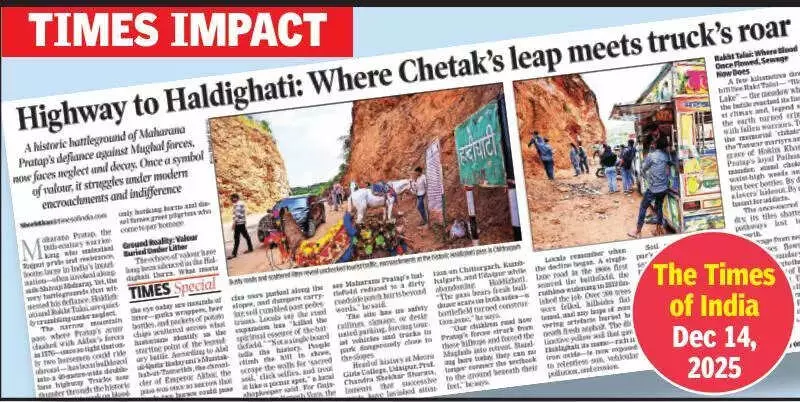
The Rajasthan High Court has taken serious notice of the declining state of two important historical locations. The court's principal seat in Jodhpur initiated suo motu proceedings based on a special report about Haldighati Pass and Rakt Talai in Rajsamand district.
Court Expresses Concern Over Multiple Issues
The bench expressed deep concern about several problems affecting these sites. Encroachments, pollution, administrative neglect and unregulated tourism are damaging these historic places. The court will hold its next hearing on January 28 to review progress.
A division bench comprising Justice Pushpendra Singh Bhati and Justice Sanjeet Purohit took cognisance of the matter on December 16. They based their action on a TOI report titled 'Highway to Haldighati: Where Chetak's leap meets truck's roar' published on December 14. The court order became available on Tuesday.

Immediate Directions Issued by the Court
The high court has issued several important directions to protect these heritage sites:
- The bench prohibited any construction or expansion activity at the sites without prior permission from competent authorities
- Officials must conduct a clean-up drive within 15 days to remove litter, weed and accumulated waste
- Adequate manpower must be deployed for proper maintenance of the areas
Government Agencies Directed to File Affidavits
The court has asked multiple government bodies to submit detailed affidavits about their conservation efforts. These include:
- Union culture and environment secretaries
- The Archaeological Survey of India (ASI)
- The superintending archaeologist of ASI, Jodhpur Circle
- The National Highways Authority of India
- The Rajasthan state government
The affidavits must contain clear timelines for implementing the proposed Maharana Pratap Tourist Circuit. They should also include the status of the detailed project report and concrete measures to address encroachments, pollution, restoration and ecological damage.
Interim Measures for Immediate Protection
The court has imposed several temporary measures to prevent further damage:
- A temporary ban on vehicular parking on historic slopes
- Strict enforcement of anti-littering fines
- Diversion of sewage flows away from the sites
- Resolution of water logging issues at Rakt Talai within 30 days
- Appointment of caretakers for round-the-clock monitoring to prevent misuse, vandalism and further encroachments
Long-Term Restoration Plans
The bench called for comprehensive restoration measures including:
- Installing anti-litter bins and safety railings
- Designating proper parking zones
- Implementing soil stabilisation measures
- Planting trees for ecological restoration
- Restoring memorials and ponds
- Putting up interpretive signboards
- Providing guided tours for visitors
- Forming oversight committees for continuous monitoring
Historical Significance and Current Threats
The TOI report highlighted the rapid degradation of heritage sites linked to Maharana Pratap and the 1576 Battle of Haldighati. The high court noted that these locations represent symbols of national pride. They are facing serious threats to their cultural, historical and ecological integrity, with the risk of irreversible damage if immediate action is not taken.
Legal Assistance and District Coordination
The court appointed senior advocates Lakshya Singh Udawat, Taniya Tuli and Yashvi Khandelwal as amicus curiae to assist in the proceedings. While district-level officials were directed to file replies, the court mentioned Udaipur officials even though both sites fall in Rajsamand district.
Advocate Khandelwal addressed this discrepancy, stating, "Any discrepancy will be brought to the notice of the court. We will seek to implead the authorities concerned from Rajsamand district." This ensures proper coordination between different administrative units for effective conservation efforts.