India's Transgender Rights Amendment Sparks Protests Over Self-Identification Removal
Last week, two contrasting developments concerning LGBTQ+ rights captured global attention. In Munich, Germany, Dominik Krause was elected mayor, becoming the first openly gay man to hold a constitutional office in a European country. Simultaneously, in India, Parliament passed the Transgender Persons (Protection of Rights) Amendment Bill, 2026, which removes the statute of self-determination for transgender individuals.
Legislative Passage Amid Parliamentary Uproar
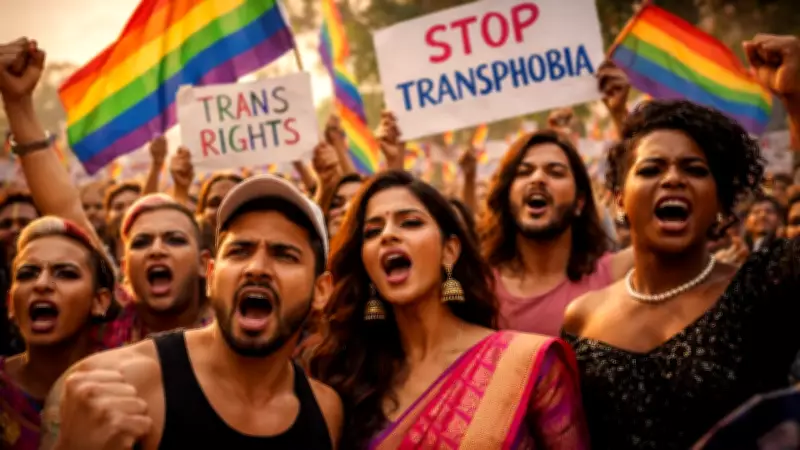
On Monday, March 30, President Droupadi Murmu assented to the bill, making it law. The legislation has since sparked widespread protests from the very community it claims to protect, with activists taking to the streets to challenge its provisions. The bill's passage created significant turmoil in both Houses of Parliament.
In Lok Sabha, the bill was taken up last Tuesday, interrupting discussion on the Finance Bill. Union Parliamentary Affairs Minister Kiren Rijiju insisted on immediate passage, which occurred through a voice vote amid opposition walkouts. Social Justice and Empowerment Minister Virendra Kumar delivered a brief two-minute reply. The following day, Rajya Sabha passed the legislation while opposition members demanded it be sent to a select committee.

NCP(SP) MP Fauzia Khan criticized the bill, stating "Viksit Bharat slogan shouldn't be about 'selective' Bharat." Minister Kumar responded by asserting the amendment would ensure transgender persons continue receiving legal recognition and protection, though with the caveat that a magistrate and medical board would determine eligibility.
Community and Expert Opposition
Anish Gwande, LGBTQ+ rights activist and national spokesperson for NCP(SP), described the bill as "illegal, unconstitutional and illogical." He questioned the timing, noting governments should focus on more pressing issues like the West Asia conflict, LPG crisis, and depreciating rupee. Gwande emphasized the bill was passed without substantive discussion within 24 hours.
The legislation introduces changes across four key areas: definition of transgender persons, identity certification process, offences and penalties, and composition of institutional bodies. The government's Statement of Objects and Reasons argues the previous definition was "vague" and made identifying "genuine oppressed persons" difficult.
Key Changes and Concerns
A Narrower Definition: The Act replaces the broader 2019 definition with a restrictive one identifying transgender persons under specific categories:
- Those belonging to socio-cultural groups like kinner, hijra, aravani, and jogta
- Individuals with congenital variations in sexual characteristics
- Persons allegedly compelled to assume transgender identity
Notably, it excludes persons with "self-perceived gender identity" and different sexual orientations, effectively excluding trans men, trans women, and genderqueer individuals outside listed categories. The inclusion of the term "eunuch," historically rooted in the Criminal Tribes Act of 1871, marks a significant shift.
The amendment removes distinct recognition of intersex persons, subsuming them under "congenital variation," reinforcing a medicalized framework. Sneha, a Delhi-based doctor, questioned this approach: "Congenital variations refer to conditions fixable with medical treatments, but applying this to gender identity makes no sense."
Medical Board Certification and Reporting Requirements
Under the 2019 law, individuals could apply for identity certificates based on self-declaration. The amendment introduces a medical board led by a Chief Medical Officer, with the district magistrate making final decisions. Hospitals performing gender-affirming surgeries must now report procedure details to authorities.
The Act introduces stringent punishments for offences like coercing individuals into transgender identity, with penalties up to life imprisonment. Gwande criticized this as "absurd" and potentially discouraging community work through criminalization without clarity.

Major Departures from 2019 Law
The 2019 Act centered on self-perceived gender identity, recognizing a wide spectrum without mandating medical intervention. The 2026 amendment removes this foundation, narrowing eligibility and excluding large transgender community sections. It includes a retrospective clause raising concerns about thousands already recognized under previous law.
Legal experts note this shift moves away from the Supreme Court's 2014 NALSA vs Union of India judgment, which held self-determination of gender as a fundamental right under Article 21.
Widespread Opposition and Resignations
Trans activist Baadal called the bill "completely arbitrary, nonsense, and violating every human right possible." Mumbai Queer Pride stated the law risks erasing transgender persons "under medical scrutiny guise."
Two National Council of Transgender Persons members, Kalki Subramanium and Rituparna Neog, resigned after Rajya Sabha approval. In her resignation letter to Minister Kumar, Subramanium wrote the bill creates "an untenable position" and represents "a step backward for fundamental rights to self-identification and dignity."
Legal Challenges and Constitutional Concerns
Lawyer Karan Singh noted the legislation "seems to fall flat on multiple legal grounds," violating the NALSA judgment, right to privacy, dignity under Article 19, and doctor-patient confidentiality. The Supreme Court's 2017 Puttaswamy vs Union of India judgment recognized informational privacy as fundamental right.
A Supreme Court-constituted advisory committee on transgender rights urged the Centre to withdraw the bill immediately after parliamentary passage. The panel, headed by former Delhi High Court judge Justice Asha Menon, wrote to Minister Kumar last Wednesday, flagging that denying self-identification rights contradicts the NALSA judgment.
Broader Implications
Beyond legality, the Act impacts everyday life. Identity certificates provide access to welfare schemes, healthcare, and employment. Complex certification may limit these benefits. Hospital reporting requirements raise surveillance and stigma concerns.
Congress MP Renuka Chowdhury questioned parliamentary awareness during Rajya Sabha debate: "When there isn't enough awareness in Parliament, how will it be on streets and society?"
Gwande expressed hope the President wouldn't assent, but with Monday's approval, he stated: "If it becomes law, we will challenge it." The Supreme Court observed in NALSA that "moral failure lies in society's unwillingness to contain or embrace different gender identities." This question remains unresolved and now faces legal testing.